Ceramic Wall Tile Exporter to Brazil From India
Jun 05, 2026Connect With Our Team
Latest Blogs


The global tile industry is expanding rapidly, driven by growing construction projects, architectural innovation, and consumer demand for durable, stylish flooring and wall solutions. Exporters today face a highly competitive landscape, where understanding market-specific size preferences has become essential.
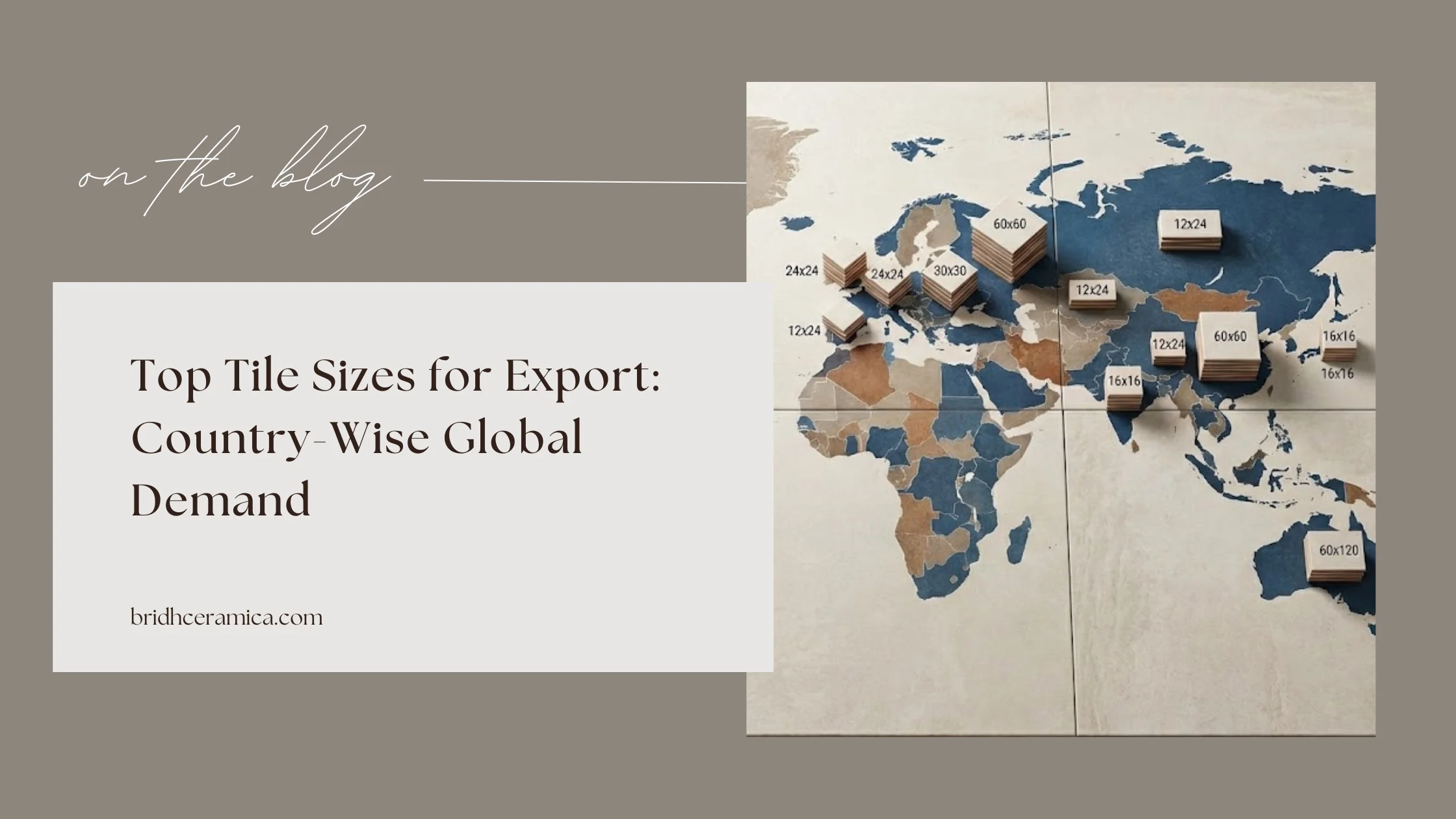
This is why the discussion on Top Tile Sizes for Export has grown more important than ever. Every country has unique requirements based on interior design culture, installation practices, and even climate. Knowing which tile size works best for which country helps manufacturers streamline production, optimize shipments, and meet global demand more effectively.
Why Does Tile Size Matter in Global Export Markets?
Tile size is not just a design preference it affects every step of the supply chain. Countries choose particular tile sizes due to:
-
Construction Standards: Some countries follow strict installation standards, leading to popularization of specific dimensions like 600×600 mm or 300×600 mm.
-
Design Trends: Large-format tiles are trending in the USA and Europe, while the Middle East prefers luxurious, glossy slabs for premium interiors.
-
Logistical Efficiency: Certain sizes maximize container loading capacity, making exports cost-effective.
-
Usage Applications: Bathroom walls, kitchen backsplashes, bedroom flooring, outdoor parking areas all require different thicknesses and dimensions.
Understanding this helps exporters align production with global expectations.
Country-Wise Global Demand for Top Tile Sizes
Different regions have distinct tile-size preferences. Here is an in-depth, country-by-country breakdown:
USA – A Dominant Market for Large-Format Tiles

The United States is one of the largest importers of Indian vitrified tiles. American homeowners, builders, and architects love seamless and modern interiors, which naturally drives demand for bigger tiles.
Top Tile Sizes for USA:
-
600×600 mm
-
600×1200 mm
-
800×1600 mm
-
750×1500 mm
-
300×600 mm
Why These Sizes?
Homes in the USA have spacious kitchens, living rooms, and open-plan designs where large tiles create a unified aesthetic. Commercial places like malls and restaurants also prefer bigger tiles for durability and elegance.
Canada – Trend-Aligned with USA but Slightly More Balanced
Canadian buyers follow US design trends but also prefer medium-format tiles for practical installation.
Preferred Sizes:
-
600×600 mm
-
600×1200 mm
-
300×600 mm
-
800×800 mm
Canadian climate-driven architectural choices often favor tiles with low porosity and larger coverage areas to prevent seepage and freezing issues.
UAE – A Luxury Market for Large & High-Gloss Tiles

The UAE’s construction sector is booming, especially in Dubai and Abu Dhabi. Luxury villas, hotels, and malls demand large polished tiles.
Top Sizes in UAE:
-
600×1200 mm
-
800×1600 mm
-
1200×2400 mm
-
300×600 mm (bathroom wall)
Reasons for Preference:
Middle Eastern architecture emphasizes grandeur, symmetry, and glossy finishes. Large tiles deliver a rich, premium ambiance.
Saudi Arabia – Strong Preference for Premium PGVT/GVT Tiles
Saudi Arabia imports millions of square meters of tiles annually. Polished and large-format vitrified tiles are the top preference.
Leading Sizes:
-
600×1200 mm
-
800×1600 mm
-
1200×1200 mm
-
300×600 mm
Most residential and commercial projects use these sizes for their aesthetic appeal and ease of maintenance.
Qatar, Oman & Bahrain – A Balanced Demand Structure
These markets follow UAE and Saudi trends with a stable demand for both mid-sized and large tiles.
Most Purchased Sizes:
-
600×600 mm
-
600×1200 mm
-
300×600 mm
-
800×800 mm
They also prefer high-definition digital printing and marble-look surfaces.
Africa – High Potential Market for Economical Tile Sizes
African nations prioritize affordability, durability, and ease of installation due to large-scale housing projects.
Top Tile Sizes for Africa:
-
250×375 mm
-
300×450 mm
-
300×600 mm
-
400×400 mm
-
600×600 mm
Key Importing Countries:
Kenya, Nigeria, Tanzania, Ghana, South Africa, Uganda, Rwanda.
Economy wall tiles (250×375 and 300×450) sell the most due to low installation costs and wide usage in residential projects.
Europe – Quality Driven with Strong Demand for Medium Sizes
European buyers focus heavily on precision, calibration, rectification, and surface quality.
Top Export Sizes:
-
300×600 mm
-
600×600 mm
-
800×800 mm
-
1200×600 mm
-
750×1500 mm
What Influences This?
European homes and commercial spaces use tiles extensively in kitchens, bathrooms, and living areas. Medium and semi-large tiles align best with their design culture.
Australia & New Zealand – Minimalist, Modern Preferences
These regions prefer contemporary and spacious looks.
Popular Sizes:
-
600×600 mm
-
600×1200 mm
-
800×800 mm
-
1200×1200 mm
Large-format matte tiles are particularly in demand for coastal homes.
Latin America – Growing Interest in GVT/PGVT Tiles

Countries like Brazil, Chile, and Peru are shifting from ceramic tiles to vitrified tiles due to higher durability.
Top Sizes:
-
600×600 mm
-
800×800 mm
-
300×600 mm
-
600×1200 mm
These sizes align with ongoing infrastructure development in the region.
Emerging Trends in Tile Sizes Worldwide
Tile size demand is changing rapidly. Exporters must stay ahead of emerging global trends to capture market share.
Rise of Large-Format Tiles: Large sizes like 800 × 1600 mm and 1200 × 2400 mm are now the global favorites due to their premium appeal.
Thin Porcelain Slabs: These slabs, typically 6–9 mm thick, are popular for: Table tops, Kitchen counters, Wall cladding
Custom Sizes: Architects increasingly request custom tile dimensions to match project layouts. Exporters offering customization gain a competitive advantage.
Sustainable Packaging: Countries like the UK, Germany, and Canada require recyclable packaging. Tile exporters must adapt their carton formats and pallet systems.
How Exporters Can Leverage Market Size Demand
To succeed in global markets, exporters should tailor their offerings to the exact tile sizes each country prefers. Here are strategies to win more export orders:
Build Country-Specific Size Catalogs: Instead of one universal size chart, create regional catalogs with the top tile sizes for each market.
Optimize Carton & Pallet Configurations: Proper packaging reduces breakage, increases container utilization, and ensures that tiles arrive in perfect condition.
Partner with Local Distributors: Distributors offer insights into evolving size preferences and upcoming construction trends.
Offer Both Standard & Premium Sizes: A diverse portfolio enables you to serve multiple segments from budget homes to luxury commercial spaces.
Stay Updated with Design Trends: Architectural preferences shift quickly. Exporters who track global style trends can adapt product lines faster.
Why India Leads the Global Tile Size Supply Chain
India is globally recognized as a tile manufacturing hub due to:
-
Ability to produce all international standard sizes
-
Advanced cutting, polishing & digital printing technology
-
Skilled workforce and strong export ecosystem
-
Competitive pricing and fast production cycle
This makes India one of the most reliable tile sourcing destinations in the world.
Why Choose Bridh Ceramica for Tile Exports?
Bridh Ceramica stands among India’s leading ceramic and vitrified tile manufacturers, offering unmatched export-quality products for global buyers.
Wide Range of Global Tile Sizes: From compact 200×300 mm wall tiles to majestic 1200×2400 mm slabs.
Precision & Consistency: High calibration accuracy, strong packaging, and moisture-protected pallets.
Shipping to 30+ Countries: Fast dispatch to the USA, Europe, Middle East, Africa, and Latin America.
OEM & Custom Size Production: Supporting distributors, wholesalers, and project developers worldwide.
Competitive Prices for Large Orders: Ensuring profitability through international-grade products at fair rates.
Conclusion
The global ceramic and vitrified tile market thrives on diversity, and understanding the Top Tile Sizes for Export is essential for success. Each country follows specific architectural styles, installation habits, and budget standards, all of which shape its tile-size preferences.
Exporters who recognize these patterns can align production, optimize shipments, and build long-term global relationships. With its robust manufacturing capabilities and export-ready product range, Bridh Ceramica continues to support international buyers with the right sizes, right quality, and right pricing.
People Also Ask: FAQs
Q1. What are the most demanded tile sizes globally?
Globally, the top tile sizes for export include 600 × 600 mm, 800 × 800 mm, and large-format tiles like 1200 × 2400 mm. Demand varies by region, with Europe and the Middle East preferring larger sizes.
Q2. Do tile size preferences change by country?
Yes. Europe prefers large slabs, Asia leans toward standard sizes, while North America demands a mix of medium and large formats.
Q3. Why are large-format tiles becoming popular worldwide?
Large tiles create seamless floors, reduce grout lines, look luxurious, and are easier to clean making them ideal for modern architecture.
Q4. How should exporters decide which tile sizes to manufacture?
Exporters should study regional demand, consult distributors, evaluate logistics costs, and focus on sizes that offer the best shipping efficiency.
Whatsapp Chatx
Hi! Click one of our representatives below to chat on WhatsApp or send us email to [email protected]

|
************** +91 97023 82809 |
 TILES VIEW