Unglazed Porcelain Tile Trends and Designs for 2026
May 05, 2026Connect With Our Team
Latest Blogs


Choosing the right flooring is one of the most important decisions in any residential or commercial project. Tiles are expected to handle daily wear, foot traffic, and environmental exposure while maintaining their appearance for years. Among the most popular premium flooring options today are full body tiles and double loading tiles.
While both are known for durability and strength, they are not the same. Understanding the difference between these two tile types helps architects, builders, and homeowners make informed decisions based on performance, aesthetics, and budget. This guide explains the key differences, applications, and benefits of each tile type so you can choose the right solution for your space.
What Are Full Body Tiles?
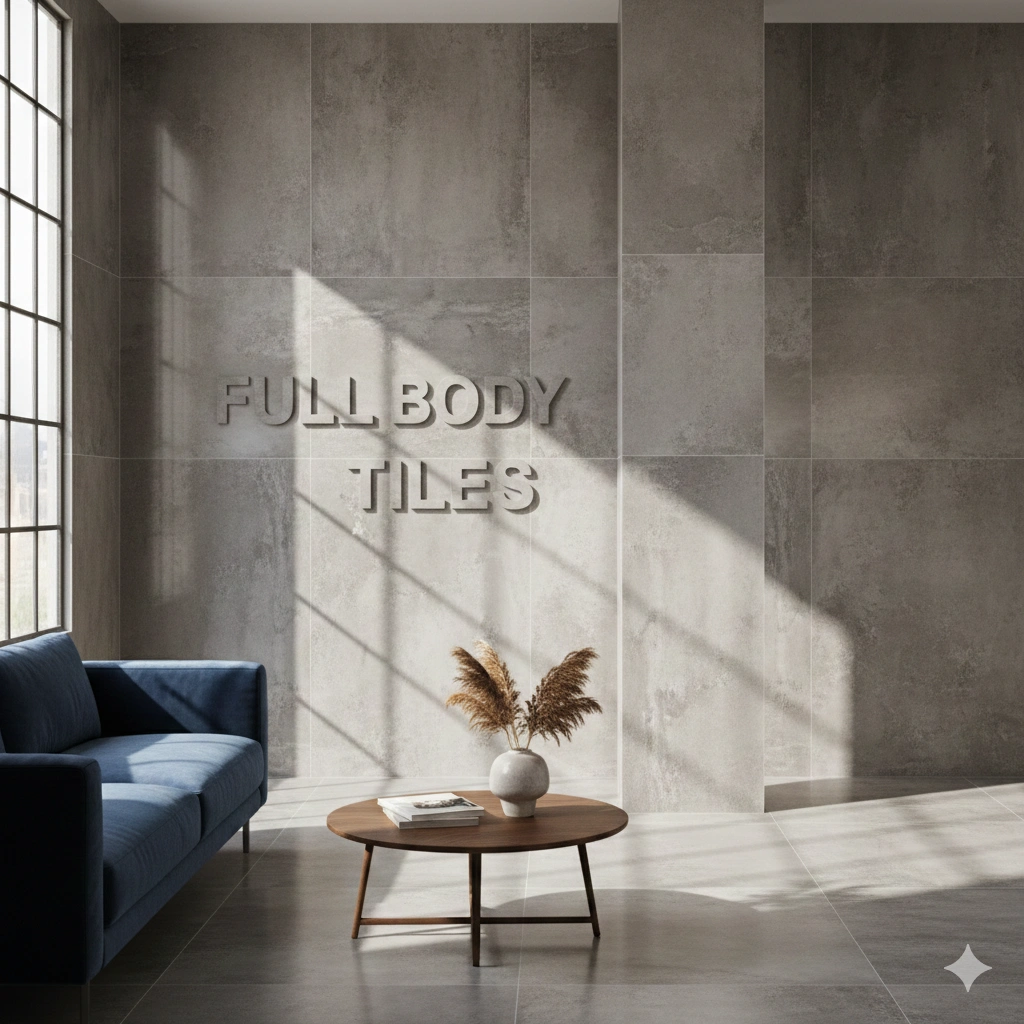
Full body tiles are manufactured using a single, uniform composition throughout the entire thickness of the tile. This means the color, texture, and design run consistently from the surface to the base.
A full body porcelain tile is created by blending high-quality raw materials such as refined clay, feldspar, and minerals. These materials are compressed under high pressure and fired at very high temperatures, resulting in a dense and extremely durable tile.
One of the biggest advantages of full body vitrified tiles is their ability to maintain the same appearance even if the surface wears down over time. Because the design extends through the entire body, minor chips or scratches are less visible, making them ideal for heavy-use areas.
Key characteristics of full body tiles:
-
Uniform color and pattern throughout
-
High resistance to abrasion and impact
-
Low water absorption
-
Excellent load-bearing capacity
What Are Double Loading Tiles?
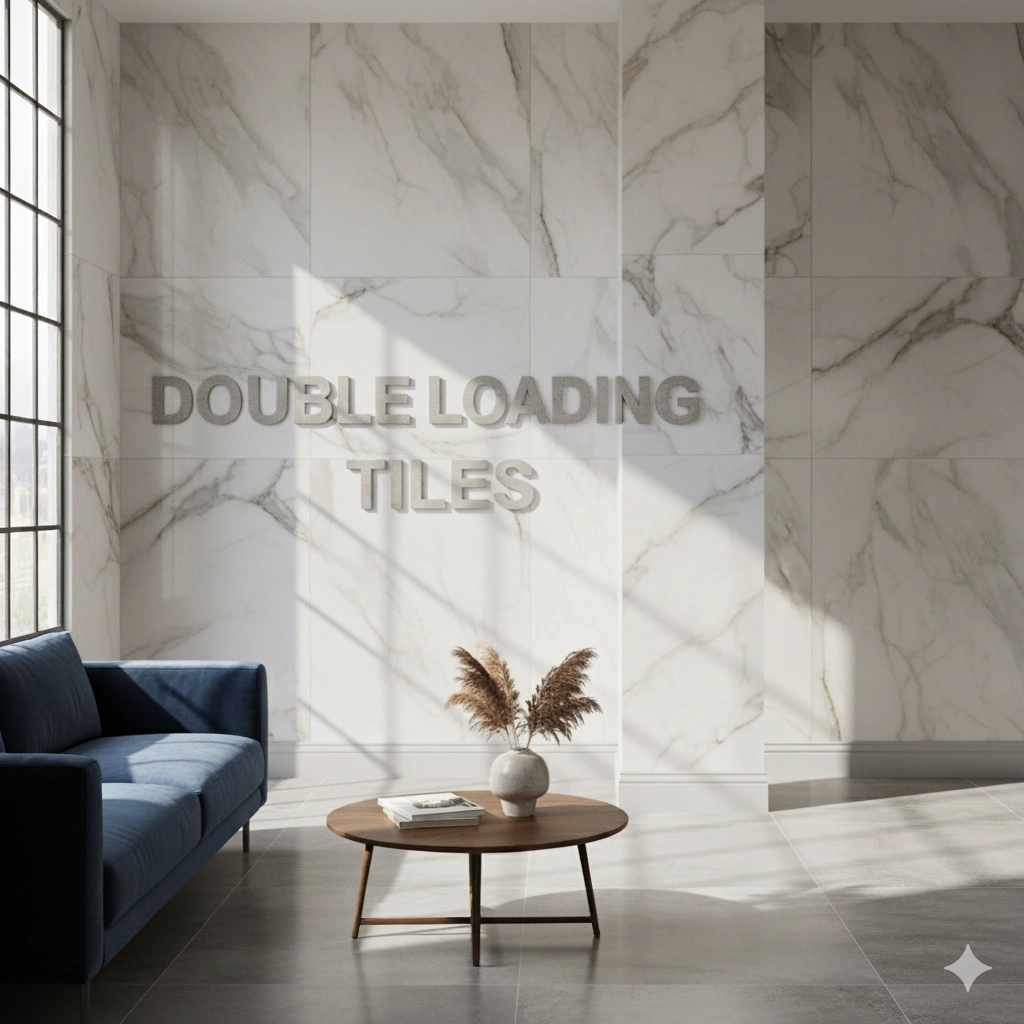
Double loading tiles are a type of vitrified tile where the design layer is added separately during manufacturing. In this process, two layers of material are pressed together before firing. The top layer contains the design, while the base layer provides structural strength.
Typically, double loaded porcelain tiles have a thicker design layer compared to standard glazed tiles. This allows the surface pattern to remain visible even after moderate wear, offering a balance between aesthetics and durability.
Double loading tiles are popular for projects that require stylish flooring with good strength but do not experience extreme mechanical stress. They are often used in residential and light commercial environments.
Key characteristics of double loading tiles:
-
Thick decorative surface layer
-
Good resistance to surface wear
-
Attractive patterns and finishes
-
Cost-effective compared to full body options
Manufacturing Process: Full Body Tiles vs Double Loading Tiles
The manufacturing process directly impacts durability, cost, and visual consistency.
Full body tiles are produced by mixing raw materials uniformly and compressing them under high pressure before firing at extremely high temperatures. This results in a dense, homogeneous tile structure.
Double loading tiles involve pressing two layers together one decorative surface layer and one base layer. This process allows for richer designs while maintaining good structural strength.
Because of the single-material structure, full body vitrified tiles generally offer better edge integrity and wear resistance than double loading tiles.
Full Body Tiles vs Double Loading Tiles: Comparison Table
|
Feature |
Full Body Tiles |
Double Loading Tiles |
|
Composition |
Uniform throughout |
Two-layer structure |
|
Design Depth |
Subtle, consistent |
Rich surface designs |
|
Durability |
Very high |
High |
|
Wear Visibility |
Minimal |
Surface wear visible |
|
Maintenance |
Low |
Moderate |
|
Cost |
Higher |
Moderate |
|
Best Use |
High-traffic areas |
Residential spaces |
Appearance & Design Comparison
In terms of aesthetics, both tile types serve different design needs.
Full body tiles usually have subtle, natural tones such as stone, cement, or solid colors. Their appeal lies in consistency and elegance rather than bold surface patterns.
Double loading tiles offer more variety in surface design, including marble effects, patterns, and textures. The thicker surface layer allows for sharper visuals compared to standard vitrified tiles.
If visual richness is a priority, double loading tiles offer more options. If uniformity and longevity matter more, full body tiles perform better.
Durability & Strength: Which Performs Better?
Durability is where full body tiles clearly stand out.
Because the entire tile has the same composition, wear over time does not affect appearance. These tiles are highly resistant to scratches, abrasion, and heavy loads.
Double loading tiles are also durable but rely heavily on the thickness of their top layer. Over time, surface wear can expose the base material, especially in high-traffic areas.
For spaces with continuous footfall, full body vitrified tiles provide superior long-term performance.
Maintenance & Longevity
Both tile types are easy to clean and maintain, but their longevity differs.
Full body tiles retain their appearance for decades because there is no surface coating or separate layer to wear off. Minor scratches are barely noticeable due to uniform coloration.
Double loading tiles require more care in high-use areas to prevent deep surface damage. While daily cleaning is easy, surface wear can become visible over time.
From a maintenance perspective, full body porcelain tile options are more forgiving and long-lasting.
Where Should You Use Full Body Tiles?
Full body tiles are best suited for areas where durability and performance are critical.
Recommended applications include:
-
Commercial buildings
-
Shopping malls
-
Airports and railway stations
-
Industrial floors
-
Outdoor walkways and parking areas
The strength of full body vitrified tiles ensures they can handle heavy loads, constant foot traffic, and environmental stress without compromising appearance.
Where Are Double Loading Tiles Best Suited?
Double loading tiles work well in spaces where aesthetics matter more than extreme durability.
Ideal applications include:
-
Residential living rooms
-
Bedrooms and hallways
-
Office spaces
-
Retail showrooms
-
Hotels and hospitality areas
These tiles provide a refined look while offering adequate strength for moderate use.
Cost Comparison: Full Body Tiles vs Double Loading Tiles
Cost is often a deciding factor for buyers.
Full body tiles are generally more expensive due to higher raw material usage and complex manufacturing. However, their long lifespan makes them cost-effective in the long run.
Double loading tiles are priced slightly lower and offer good durability for residential projects. They provide a balance between aesthetics and affordability.
If long-term value is the goal, full body vitrified tiles offer better return on investment.
Slip Resistance & Safety Factors
Safety is essential, especially for flooring.
Full body tiles are commonly available in matte and textured finishes, offering excellent slip resistance. This makes them suitable for commercial and heavy-use spaces.
Double loading tiles may have smoother surfaces depending on design, so finish selection is important for wet or high-risk areas.
For safety-focused applications, surface texture should be prioritized regardless of tile type.
Environmental & Sustainability Considerations
Both tile types are produced using natural raw materials and high-temperature firing.
Full body tiles often have a longer lifecycle, reducing replacement frequency and material waste over time.
Double loading tiles use additional material layers, which can slightly increase resource consumption.
From a sustainability perspective, durability plays a key role, making full body tiles a more environmentally responsible long-term choice.
Full Body Tiles vs Double Loading Tiles: Which One Should You Choose?
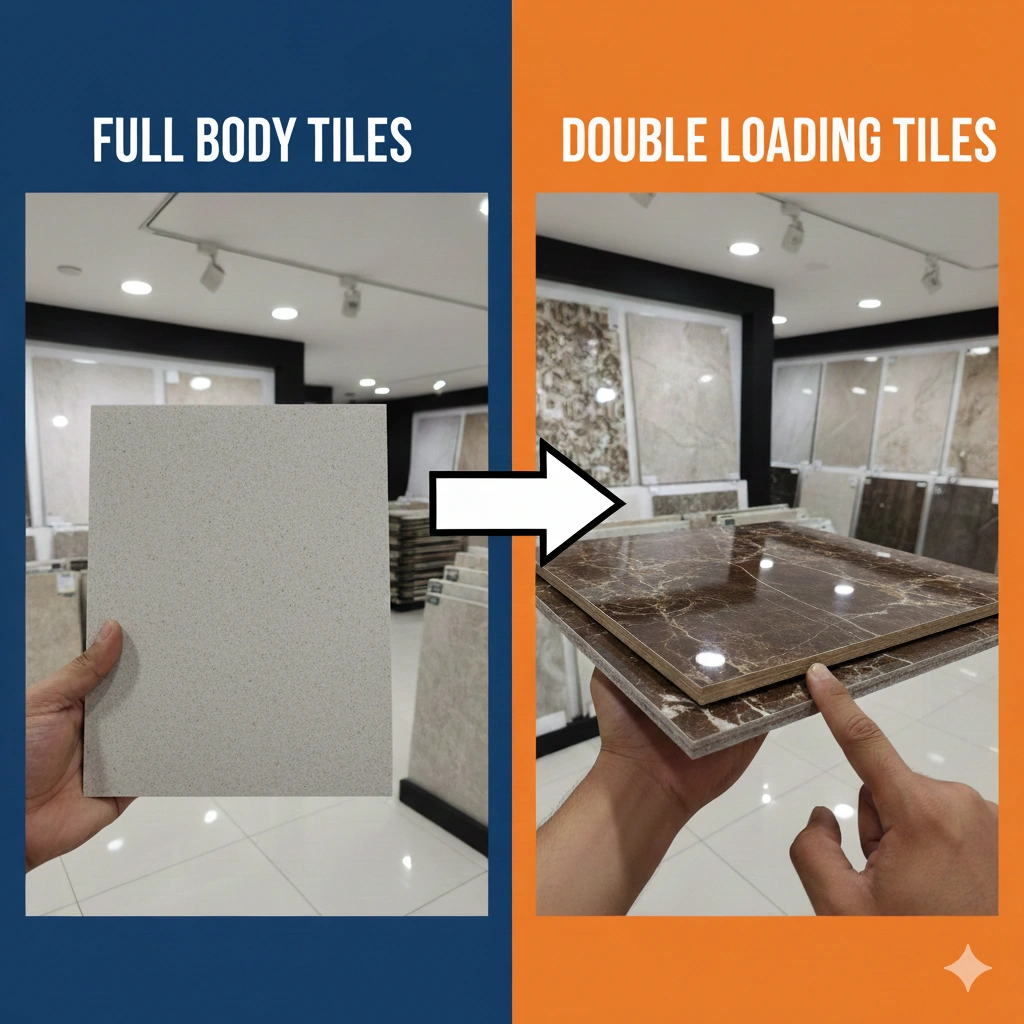
The choice depends on several practical factors rather than just appearance.
Choose full body tiles if:
-
The area has heavy foot traffic
-
Long-term durability is a priority
-
Minimal visible wear is required
-
The space is commercial or industrial
Choose double loading tiles if:
-
Design flexibility is important
-
The area has moderate usage
-
Budget considerations matter
-
The project is residential or semi-commercial
Evaluating these factors ensures the right tile selection for both performance and aesthetics.
Expert Tips from Tile Manufacturers
-
Always check tile thickness and abrasion resistance ratings
-
Choose tiles based on usage, not just appearance
-
Ensure proper installation for long-term performance
-
Match tile type with traffic load requirements
These expert considerations help maximize tile lifespan and value.
Why Choose Bridh Ceramica for Vitrified Tiles?
Bridh Ceramica is known for manufacturing high-quality vitrified tiles that balance strength, design, and consistency. With strict quality control and advanced production processes, Bridh Ceramica ensures reliable performance across residential and commercial applications.
Whether selecting full body vitrified tiles or double loading tiles, Bridh Ceramica offers durable solutions designed for long-term value and modern architectural needs.
Conclusion
Both full body tiles and double loading tiles serve specific purposes in modern construction. While double loading tiles provide design flexibility at a moderate cost, full body tiles stand out for durability, longevity, and performance.
By understanding these differences, homeowners, architects, and builders can confidently choose the right tile solution that aligns with their project requirements and long-term expectations.
People Also Ask (FAQs)
1. Are full body tiles better than double loading tiles?
Yes, for high-traffic areas, full body tiles perform better due to uniform composition and higher wear resistance.
2. Which tiles last longer?
Full body tiles generally last longer because surface wear does not affect their appearance.
3. Are double loading tiles suitable for commercial use?
They can be used in moderate-traffic commercial spaces but are not ideal for heavy footfall zones.
4. Do full body tiles require special maintenance?
No, they require standard cleaning and minimal maintenance.
5. Which option offers better value for money?
For long-term usage, full body porcelain tile options offer better overall value.
Whatsapp Chatx
Hi! Click one of our representatives below to chat on WhatsApp or send us email to dhaval@bridhceramica.com

|
************** +91 97023 82809 |
 TILES VIEW