Ceramic Wall Tile Exporter to Brazil From India
Jun 05, 2026Connect With Our Team
Latest Blogs

Porcelain tiles are among the most popular materials used for flooring and wall applications in residential and commercial projects. Many buyers are confused by the wide price differences across collections. These variations are not random but depend on technical and design factors. Understanding how tile size, thickness, and surface finish affect pricing helps you make smarter, value-driven decisions.
Understanding Porcelain Tile Pricing Basics
Porcelain surfaces are made from refined clay and fired at high temperatures, which gives them higher density and durability than standard ceramic options. However, pricing can vary significantly across different collections.
Several elements influence the final cost:
-
Raw material quality
-
Manufacturing technology
-
Tile dimensions and surface treatment
-
Intended application (residential or commercial)
Higher performance, advanced finishes, and precision manufacturing naturally increase production costs, which reflects in pricing.
Is Porcelain Tile More Expensive Than Ceramic?
In most cases, porcelain options are priced higher than ceramic alternatives because they absorb less water, offer greater strength, and last longer. Although ceramic tiles may be cheaper initially, these surfaces often deliver better long-term value in high-traffic areas.
How Porcelain Tile Size Impacts Pricing
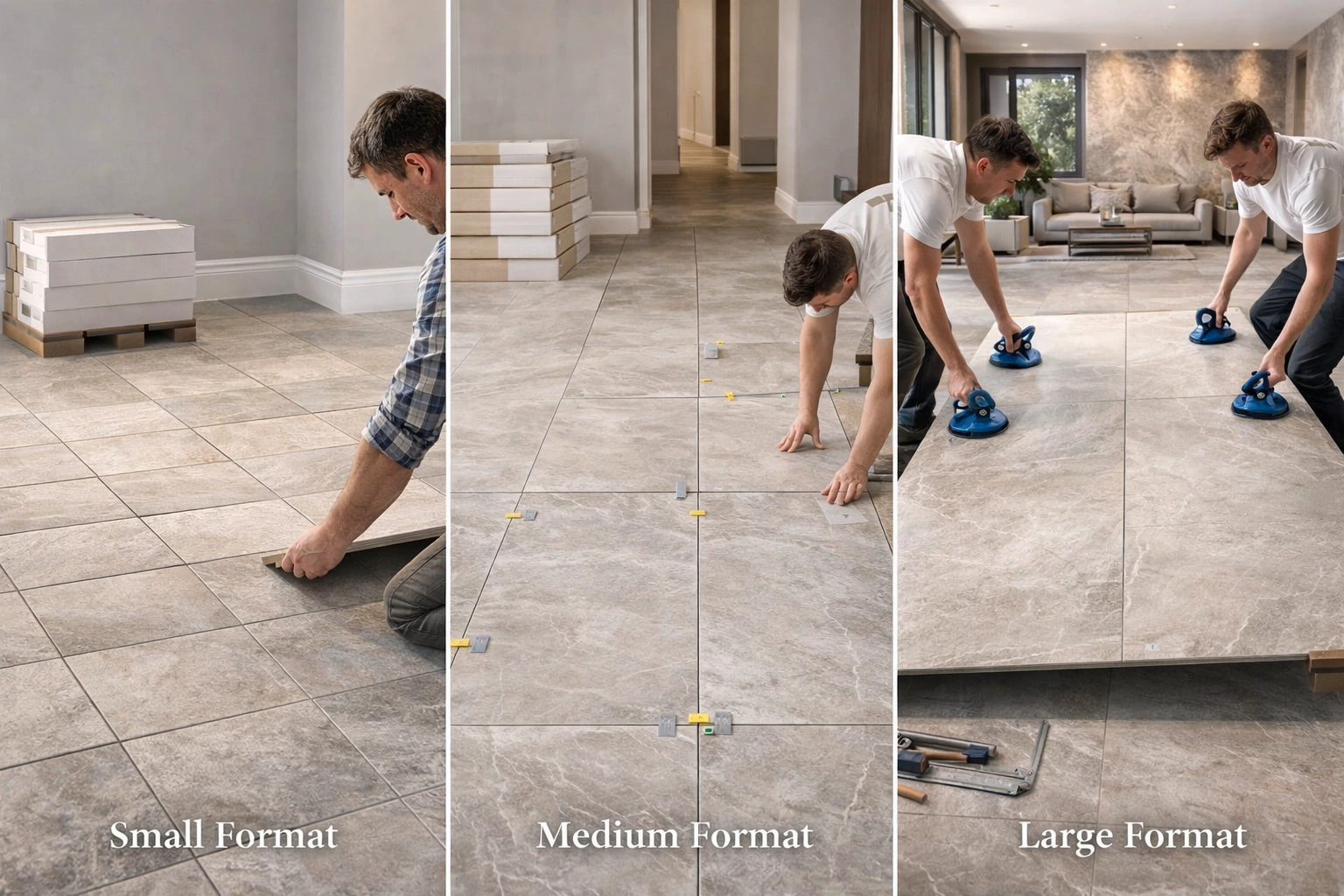
Tile size is one of the most visible factors affecting cost. Larger formats require advanced machinery, precise firing control, and careful handling during production and transport.
Common size categories include:
-
Small formats like 12x12 porcelain tile
-
Medium formats such as 12x24 porcelain tile
-
Large formats including 24x48 porcelain tile and 48 x 48 porcelain tile
As tile size increases, so do production complexity, wastage risk, and transportation costs.
Are Porcelain Large-Format Tiles Worth the Higher Cost?
Porcelain large-format tile options are popular in modern interiors and commercial spaces. They create fewer grout lines and a seamless appearance, which many designers prefer. Although they cost more per square meter, these tiles can reduce installation time and significantly enhance visual appeal.
Small vs Large Tile – Cost Comparison
-
Smaller tiles are easier to manufacture and transport
-
Large formats require precision cutting and reinforced packaging
-
Installation costs may rise with large tiles due to skilled labor needs
This makes large porcelain tile formats a premium but visually impactful choice.
Tile Thickness and Its Effect on Cost
Porcelain tile thickness directly affects durability, strength, and price. Standard indoor tiles are thinner, while heavy-duty applications demand thicker options.
Common thickness options include:
-
6mm porcelain tiles for walls and low-traffic floors
-
9–10mm for standard flooring
-
20mm porcelain tiles for outdoor and high-load areas
Thicker tiles use more material and require longer firing cycles, increasing production costs.
Does Thicker Tile Mean Better Quality?
Thickness alone does not define quality, but it determines suitability. Thicker tiles perform better in outdoor, commercial, and industrial spaces. For residential interiors, thinner tiles often provide sufficient strength at a lower cost.
Thin vs Thick Tiles – Which Should You Choose?
-
Thin tiles work well for renovations and wall applications
-
Thick tiles are ideal for patios, parking areas, and public spaces
-
Choosing the right thickness avoids unnecessary expenses
Matching thickness to usage is key to cost efficiency.
Tile Finish and Its Influence on Pricing
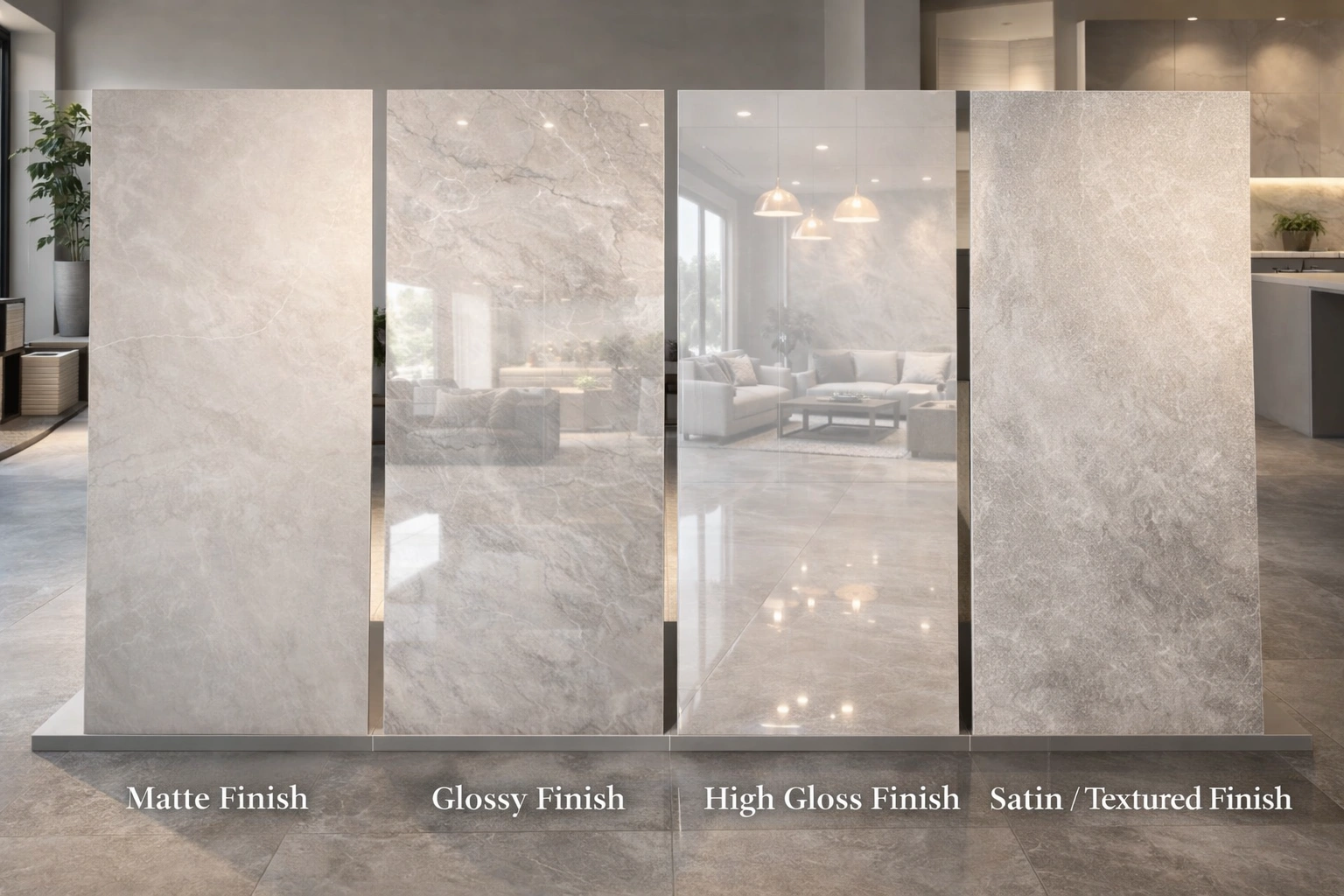
Porcelain tile finish plays a major role in pricing because surface treatments require additional processing steps.
Popular finishes include:
-
Matte porcelain tile
-
Glossy porcelain tile
-
High gloss porcelain tile
-
Satin and textured finishes
Each finish involves different polishing or coating techniques, impacting production time and cost.
Polished vs Matte Tiles – Price Differences
Polished and high gloss finishes require mechanical polishing, increasing manufacturing expenses. Matte tiles skip this step, making them more affordable and easier to maintain. However, polished tiles offer a reflective, luxury appearance that many buyers prefer.
Do Special Finishes Increase Porcelain Tile Prices?
Yes, specialty finishes such as:
-
Porcelain wood tile
-
Satin porcelain floor tiles
-
Anti-slip textured surfaces
These finishes involve advanced digital printing and surface treatments, which increase cost but enhance aesthetics and functionality.
Other Key Factors That Affect Tile Pricing
Beyond size, thickness, and finish, several hidden factors influence pricing.
Key considerations include:
-
Quality of raw materials
-
Precision calibration and rectification
-
Consistency in shade and size
Higher quality control standards lead to better performance but also raise production costs.
Does Tile Design and Printing Technology Affect Cost?
Tiles that replicate marble, stone, or wood require advanced digital printing technology. Porcelain wood tile designs, for example, demand high-resolution printing and surface texturing, which adds to the price.
How Brand, Origin & Quality Standards Impact Price
Tiles manufactured by established exporters following international standards often cost more. This reflects better consistency, durability, and compliance with global construction requirements.
Pricing Differences by Application Area
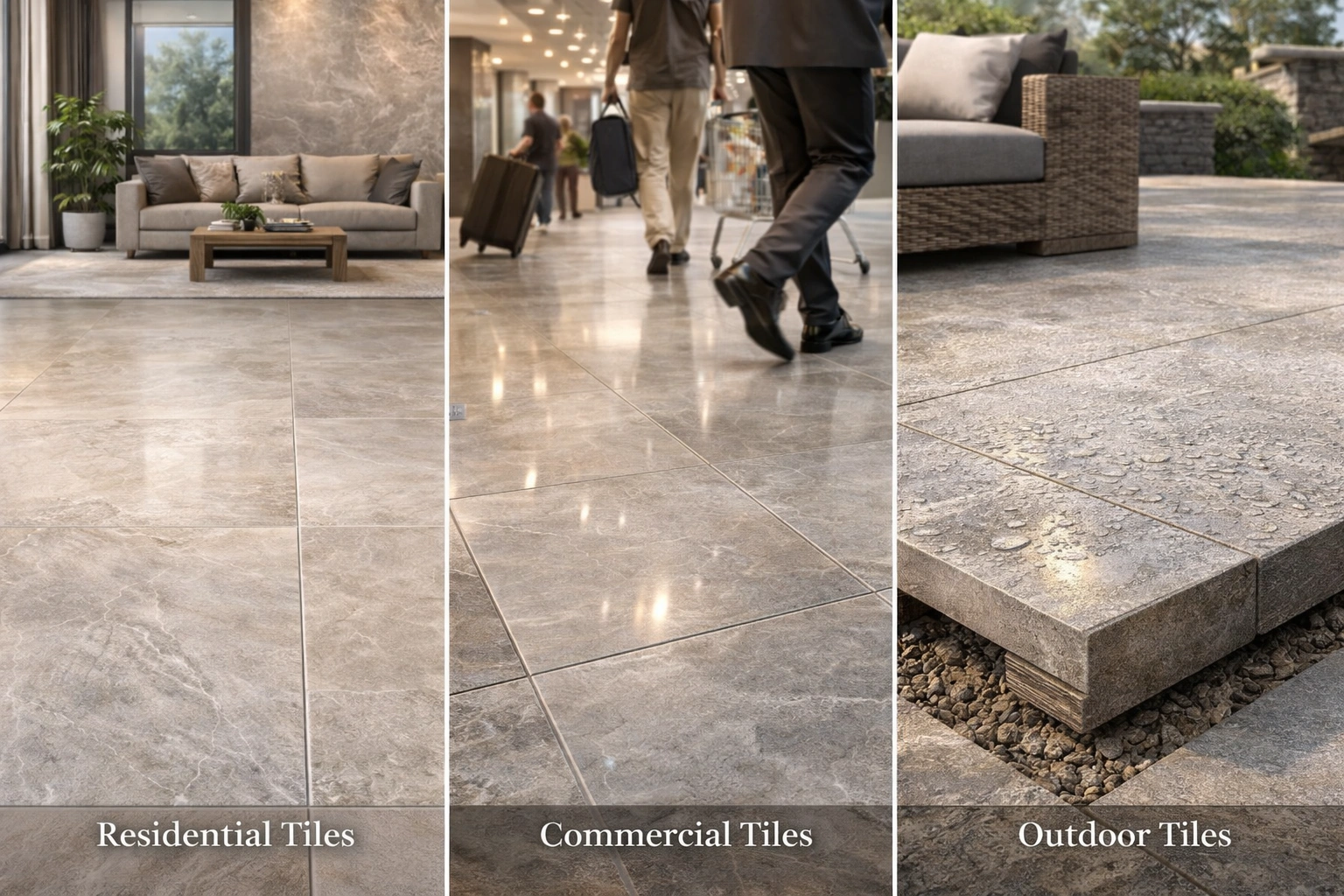
Application plays a crucial role in determining tile specifications and cost.
-
Residential tiles focus on design and comfort
-
Commercial tiles emphasize durability and slip resistance
Outdoor tiles require thicker profiles and weather resistance, which affects pricing.
Are Commercial-Grade Tiles More Expensive?
Commercial-grade tiles are generally priced higher due to:
-
Increased load-bearing capacity
-
Higher abrasion resistance
-
Longer service life
Although the upfront cost is higher, they reduce replacement and maintenance expenses over time.
Tile Pricing Comparison Table
| Tile Feature | Common Options | Price Impact | Best Use |
|---|---|---|---|
| Size | 12x12, 12x24, 24x48, 48x48 | Larger size = higher cost | Modern interiors, commercial |
| Thickness | 6mm, 9mm, 20mm | Thicker = higher cost | Indoor vs outdoor |
| Finish | Matte, Glossy, Satin | Polished costs more | Design-focused spaces |
| Design | Plain, Wood-look, Marble-look | Printed designs cost more | Decorative flooring |
How to Choose the Right Porcelain Flooring Without Overpaying
Smart tile selection balances performance, aesthetics, and budget.
Helpful tips:
-
Avoid oversized tiles where unnecessary
-
Match thickness to usage area
-
Choose finishes based on maintenance needs
What Should Buyers Prioritize – Size, Thickness, or Finish?
For most buyers, thickness and finish should match functional needs first. Size should enhance design without exceeding installation or budget limits.
Tile Export Quality & Pricing Considerations
Export-quality tiles undergo strict quality checks, ensuring uniformity and durability. These tiles are calibrated, well-packed, and tested for international markets.
Does Export-Quality Tile Cost More?
Export-grade tiles may cost slightly more, but they offer better consistency, reduced breakage, and long-term reliability, making them cost-effective for large projects.
Why Bridh Ceramica Adds Value to Porcelain Tile Pricing
Bridh Ceramica specializes in manufacturing and exporting high-quality porcelain and ceramic tile solutions for global markets. The company offers slab tiles, full-body porcelain, glazed tiles, and ceramic wall tiles tailored for residential and commercial use. With advanced production technology and strict quality control, Bridh Ceramica delivers consistent sizing, refined finishes, and durable tile solutions. Their product range balances design, performance, and pricing, making them a reliable choice for international projects.
Choose Premium Porcelain Tiles
Conclusion
Overall pricing is shaped by size, thickness, and finish, along with design complexity and quality standards. Larger sizes, thicker profiles, and polished finishes naturally increase costs, while standard formats remain budget-friendly. Understanding these factors helps buyers choose tiles that match both functional needs and design goals. The right tile is not about the lowest price, but the best value for long-term use.
Frequently Asked Questions (FAQ)
1. Why do porcelain tile prices vary so much?
Prices vary due to differences in size, thickness, finish, and manufacturing quality.
2. Are thicker porcelain tiles always better?
No, thicker tiles are better for heavy-duty use, while thinner tiles suit indoor spaces.
3. Is large-format porcelain tile more expensive to install?
Installation often costs more due to handling and skilled labor requirements.
4. How can I choose porcelain tiles within my budget?
Match tile specifications to application needs and avoid unnecessary premium features.
Whatsapp Chatx
Hi! Click one of our representatives below to chat on WhatsApp or send us email to dhaval@bridhceramica.com

|
************** +91 97023 82809 |
 TILES VIEW