Ceramic Wall Tile Exporter to Brazil From India
Jun 05, 2026Connect With Our Team
Latest Blogs





Choosing the right surface material is one of the most important decisions in any construction or interior design project. With modern architecture favoring clean lines, seamless finishes, and durability, natural stone slabs and porcelain slabs have become two of the most popular choices for floors, walls, countertops, and outdoor areas.
While both materials offer premium aesthetics, their performance, maintenance needs, cost, and applications vary significantly. This buying guide will help homeowners, architects, and builders understand the key differences between stone slabs and porcelain alternatives so they can make an informed decision for residential or commercial projects.
What Are Natural Stone Slabs?
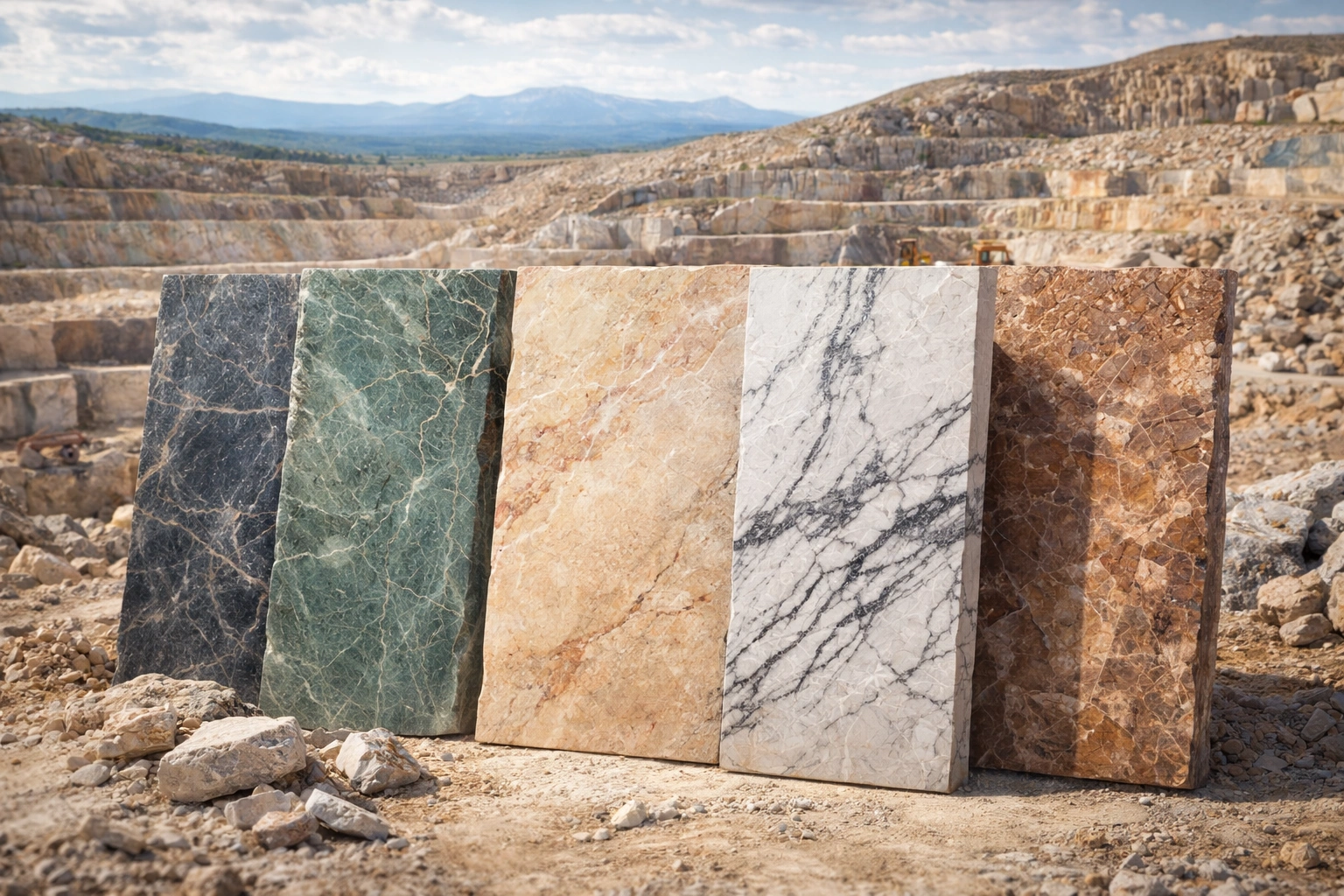
Natural stone slabs are large, solid pieces of stone extracted directly from quarries and cut into slabs of varying sizes and thicknesses. Each slab is formed over thousands of years through natural geological processes, making every piece unique in appearance.
Common Types of Natural Stone Slabs
-
Marble: Known for elegant veining and luxurious appeal
-
Granite: Extremely hard and durable, ideal for heavy use
-
Travertine: Warm tones and porous texture
-
Limestone: Soft, earthy aesthetics
-
Onyx: Translucent and decorative
Key Characteristics
-
One-of-a-kind veining and color variations
-
Natural textures and depth
-
Available in polished, honed, leathered, and brushed finishes
-
Typically used for flooring, wall cladding, countertops, and outdoor stone slabs
Because natural stone is quarried, no two slabs are exactly alike this uniqueness is a major selling point for luxury interiors.
What Are Porcelain Slabs?
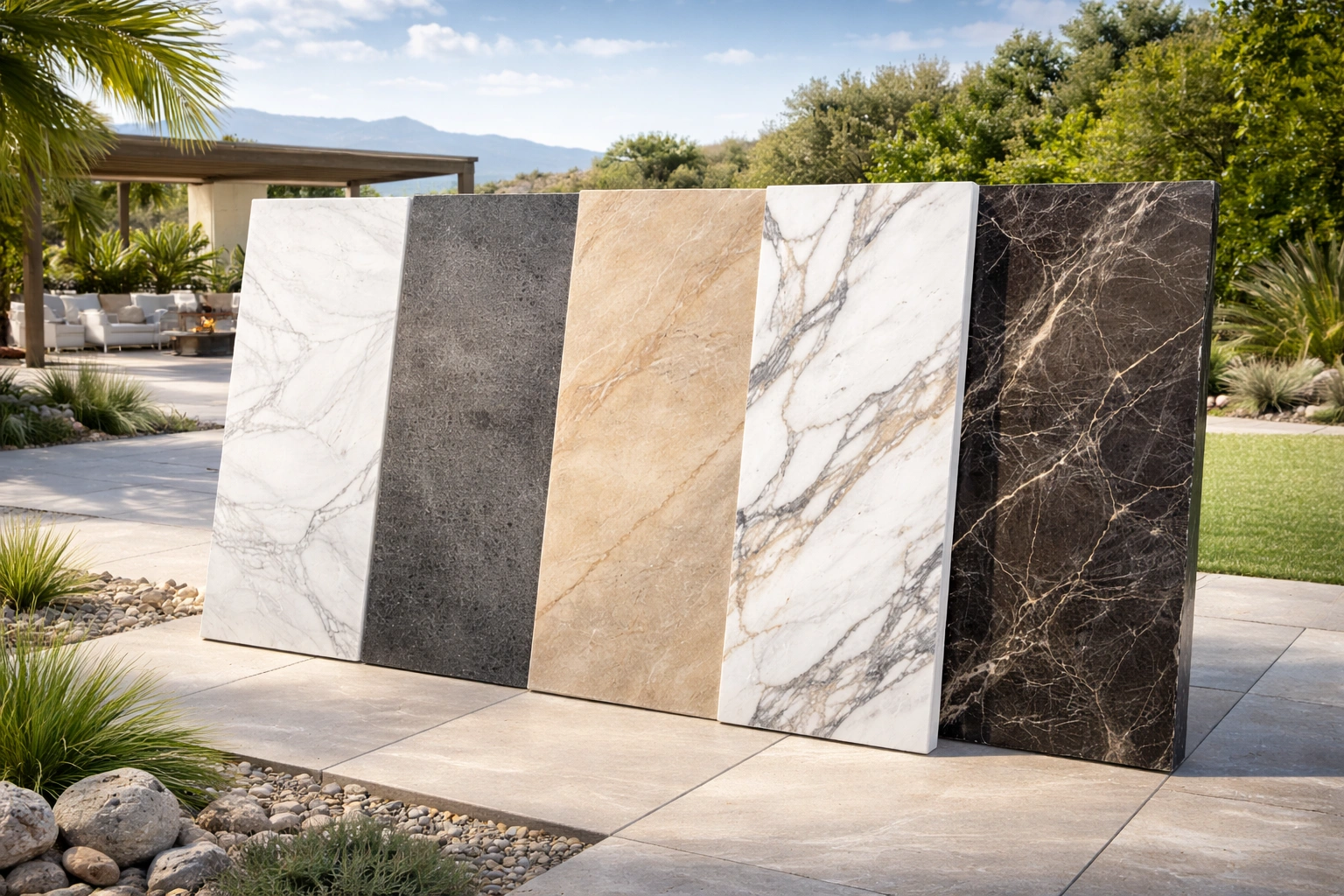
Porcelain slabs are engineered surfaces made from refined clay, minerals, and natural pigments, fired at extremely high temperatures. This process creates a dense, non-porous, and highly durable material suitable for both indoor and outdoor use.
Features of Porcelain Slabs
-
Available in large format porcelain slabs for seamless surfaces
-
Consistent design and color throughout
-
Ultra-low water absorption
-
Lightweight compared to stone slabs
Design Options
-
Marble-look porcelain slabs
-
Concrete and cement finishes
-
Black porcelain slabs and white porcelain slabs for modern interiors
-
Wood effect paving slabs that replicate natural timber
-
Textured finishes for porcelain outdoor slabs
Porcelain technology allows manufacturers to recreate the appearance of natural stone while enhancing durability and ease of maintenance.
Natural Stone Slabs vs Porcelain Slabs – Key Differences
Material Composition
Natural stone slabs are extracted directly from quarries, making them a completely natural product. Porcelain slabs, on the other hand, are man-made and engineered for uniform quality and performance.
Appearance and Design Variety
Natural stone slabs offer unmatched authenticity, depth, and organic variation. Each slab tells its own story through unique veining and textures.
Porcelain slabs provide a wide range of consistent designs. Buyers can choose from marble-inspired looks, minimal concrete finishes, bold black porcelain slabs, clean white porcelain slabs, or warm wood effect paving slabs.
Durability and Strength
Porcelain slabs are extremely strong and resistant to scratches, stains, and impact. Their density makes them suitable for high-traffic areas.
Natural stone slabs are durable but can vary in hardness depending on the stone type. Some stones require extra care to prevent surface damage over time.
Water Absorption and Moisture Resistance
Natural stone slabs are porous and may absorb water if not properly sealed. This makes them less suitable for wet or outdoor areas without regular maintenance.
Porcelain slabs have very low water absorption, making them ideal for porcelain outdoor slabs, porcelain garden slabs, and wet environments.
Maintenance Requirements
Natural stone slabs often need sealing and specialized cleaning to maintain their appearance.
Porcelain slabs require minimal maintenance and are easy to clean, making them a practical choice for modern lifestyles.
Natural Stone Slabs vs Porcelain Slabs – Comparison Table
|
Feature |
Natural Stone Slabs |
Porcelain Slabs |
|
Material |
Natural quarried stone |
Engineered ceramic |
|
Appearance |
Unique, organic patterns |
Consistent, wide variety |
|
Durability |
Strong but porous |
Extremely durable |
|
Maintenance |
High |
Low |
|
Water Resistance |
Moderate |
Excellent |
|
Indoor & Outdoor Use |
Limited outdoors |
Ideal for indoor & outdoor |
Applications: Where Can Each Slab Be Used?
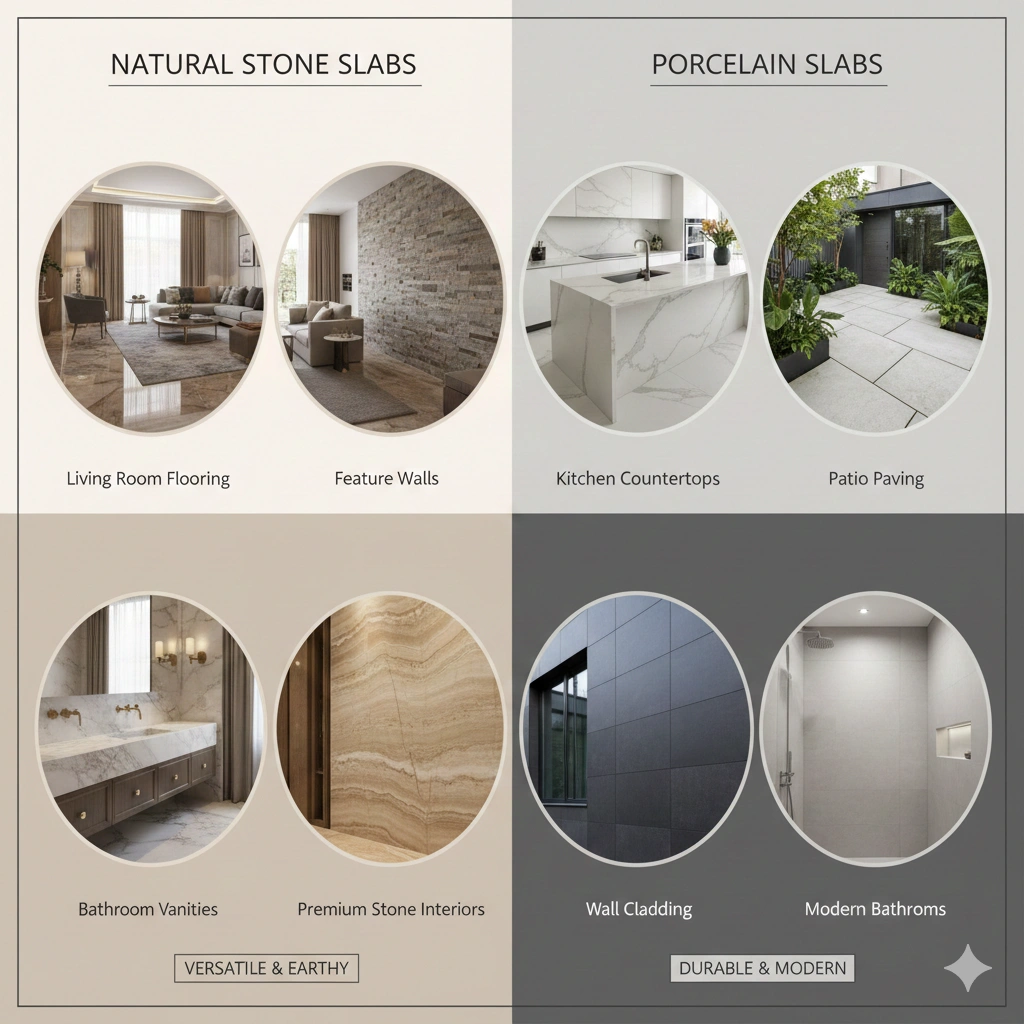
Both materials are versatile, but suitability depends on the environment.
Natural stone slabs are commonly used for:
-
Living room flooring
-
Feature walls
-
Bathroom vanities
-
Premium stone slabs for interiors
Porcelain slabs work well for:
-
Porcelain slab flooring
-
Kitchen countertops
-
Wall cladding
-
Porcelain paving slabs for patios
-
Outdoor stone slabs alternatives with higher durability
Porcelain’s adaptability makes it ideal for modern residential and commercial projects.
Pros and Cons of Natural Stone Slabs
Advantages
-
Authentic natural beauty
-
Unique patterns and textures
-
Adds premium value to interiors
-
Long-lasting when properly maintained
Limitations
-
Requires sealing and regular care
-
Susceptible to stains and acids
-
Higher long-term maintenance costs
Pros and Cons of Porcelain Slabs
Advantages
-
High durability and scratch resistance
-
Minimal maintenance
-
Suitable for indoor and outdoor use
-
Wide range of finishes and designs
-
Ideal for porcelain slab flooring and wall applications
Limitations
-
Less natural depth than real stone
-
Requires skilled installation due to slab size
Installation Considerations You Should Know
Both slab types require professional installation. Natural stone slabs need careful handling due to their weight and thickness. Proper sealing during installation is essential.
Porcelain slabs, especially large format porcelain slabs, require precise cutting tools and experienced installers to ensure correct alignment and finish.
Choosing skilled professionals is critical to achieving long-term performance.
How to Choose Between Natural Stone and Porcelain Slabs
When deciding between natural stone slabs and porcelain slabs, consider:
-
Budget and long-term costs
-
Indoor vs outdoor application
-
Maintenance expectations
-
Desired aesthetics
-
Climate and usage conditions
Porcelain slabs suit functional, high-use areas, while natural stone slabs excel in luxury-focused interiors.
Why Porcelain Slabs Are a Smart Choice for Modern Projects
Porcelain slabs meet the demands of modern living. Their resistance to stains, moisture, and wear makes them ideal for busy homes and commercial spaces.
With options like white porcelain slabs, black porcelain slabs, and outdoor solutions, they offer both beauty and performance. Brands like Bridh Ceramica focus on quality, innovation, and design consistency, making porcelain a reliable choice.
Why Choose Bridh Ceramica for Porcelain Slabs?
Bridh Ceramica is a reliable manufacturer of premium porcelain slabs, known for combining modern design with consistent quality. The brand offers a versatile range of large format porcelain slabs that suit flooring, wall cladding, countertops, and exterior applications. From elegant white porcelain slabs to bold black porcelain slabs and natural stone-inspired finishes, Bridh Ceramica delivers surfaces that align with contemporary architectural needs.
Designed for performance and longevity, Bridh Ceramica’s porcelain range is ideal for porcelain slab flooring, porcelain outdoor slabs, and porcelain paving slabs used in gardens, patios, and high-traffic areas. With low maintenance, high durability, and excellent moisture resistance, these slabs provide a practical yet stylish alternative to natural stone for both residential and commercial projects.
Conclusion
Both natural stone slabs and porcelain slabs offer distinct advantages depending on your project needs. Natural stone brings timeless elegance and uniqueness, while porcelain slabs deliver durability, versatility, and ease of maintenance.
By understanding their differences, applications, and long-term performance, you can confidently select the right slab solution that balances aesthetics, functionality, and value.
Frequently Asked Questions
1. Which is better, natural stone or porcelain slabs?
Both have advantages. Natural stone slabs offer unmatched authenticity, while porcelain slabs provide durability and low maintenance.
2. Are porcelain slabs more durable than natural stone slabs?
Yes, porcelain slabs are generally more resistant to stains, scratches, and moisture.
3. Can porcelain slabs be used outdoors?
Absolutely. Porcelain outdoor slabs and porcelain garden slabs perform exceptionally well in outdoor conditions.
4. Do natural stone slabs require sealing?
Yes, sealing is essential to protect natural stone slabs from moisture and stains.
5. Are porcelain slabs suitable for flooring?
Yes, porcelain slab flooring is widely used due to its strength and easy maintenance.
Whatsapp Chatx
Hi! Click one of our representatives below to chat on WhatsApp or send us email to [email protected]

|
************** +91 97023 82809 |
 TILES VIEW