Ceramic Wall Tile Exporter to Brazil From India
Jun 05, 2026Connect With Our Team
Latest Blogs




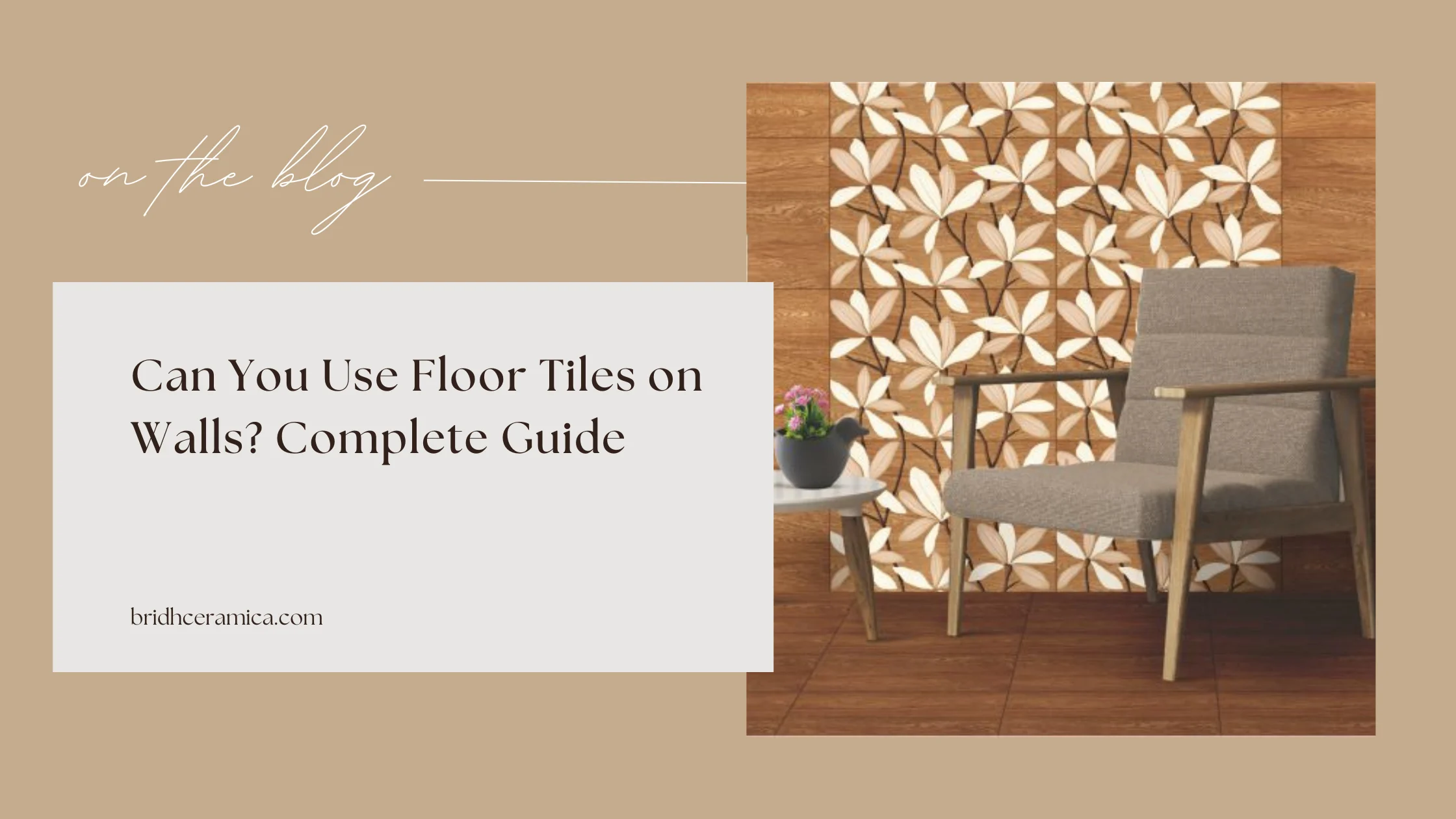
If you’re planning a new bathroom or kitchen, you’ve probably asked yourself: can you use floor tiles on walls? It’s a smart question. Tiles look simple, but the wrong choice in the wrong place can affect safety, looks, and even the life of your space.
In this complete guide, we’ll break down the differences between floor tiles and wall tiles, when it’s safe to swap them, and how to use them creatively in bathrooms, kitchens, and living spaces, all from the perspective of a professional tile and ceramics brand.
Floor Tiles vs Wall Tiles: Key Differences You Must Know
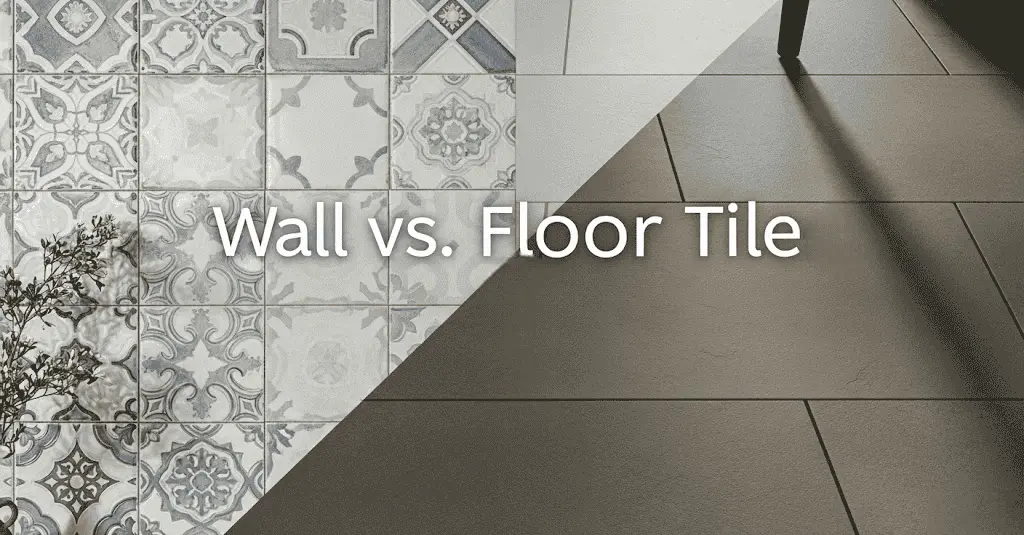
Before you decide anything, it’s important to understand how floor tiles and wall tiles are designed differently.
1. Thickness, Weight & Strength
Floor tiles are engineered to carry weight, people, furniture, and constant movement. That’s why they are usually thicker and denser than wall tiles. Many indoor floor tiles fall roughly in the 8–12 mm range, while wall tiles are often a bit thinner to make vertical installation easier and to reduce weight on the wall.
Wall tiles don’t experience the same stress as a floor, so they can focus more on design and surface finish. This difference in thickness and density is the main reason you can sometimes use floor tiles on walls, but not the other way round.
2. Surface Finish & Slip Resistance
When used on the floor, tiles must be safe underfoot, especially in wet rooms like bathrooms and kitchens. That’s why many floor tiles have a textured or matte finish and specific slip-resistance ratings.
Wall tiles, on the other hand, can be smoother and glossier because nobody walks on them. High-gloss bathroom wall tiles or kitchen wall tiles are very popular as they reflect light and make spaces feel brighter.
3. Size, Format & Design
Floor tiles are commonly seen in larger formats, ideal for spacious living rooms, bathroom floor tiles, and kitchen floor tiles. Wall tiles can be smaller, lighter, and more decorative, but today, many designers use large floor-format tiles on walls to create a luxury, seamless look.
This is especially true for porcelain tiles and patterned floor tiles, which look stunning as feature walls behind a vanity, shower, or TV unit.
4. Tile Substrate & Fixing Requirements
The term tile substrate simply means the base surface on which you are fixing the tile, like cement board, plaster, concrete, or backer board. For a successful installation, this substrate must be strong, stable, and suitable for the tile’s weight.
Floors usually have a robust subfloor structure underneath, but walls don’t always have the same strength. That’s why using heavy floor tiles on weak or poorly prepared walls can lead to failures if the substrate and adhesive are not chosen correctly.
Can You Use Floor Tiles on Walls?
Yes – But Only Under the Right Conditions
In many cases, you can use floor tiles on walls, and it’s a very popular choice in modern design. However, a few conditions must be met:
-
The wall must be strong enough to support the extra weight of floor tiles.
-
The combined weight of tile + adhesive should not exceed recommended limits per square metre for your wall construction.
-
A suitable tile substrate (like a tile backer board) is essential, especially in wet rooms.
-
You must use the correct adhesive and installation method as recommended by the manufacturer.
If all these boxes are ticked, using floor tiles as wall tiles can be a clever, long-lasting choice.
Floor tiles may not be ideal on walls when:
-
The tiles are very thick or oversized and the wall substrate is weak or old.
-
There is poor-quality plaster or damaged partitions without proper reinforcement.
-
Heavy outdoor-grade porcelain floor tiles are used on lightweight internal walls without checking weight limits.
In such cases, it’s safer to choose lighter porcelain wall tiles or standard bathroom wall tiles designed specifically for vertical use.
Pros and Cons of Using Floor Tiles on Walls
Advantages
-
Extreme durability: Floor tiles are made to withstand traffic and impact, so on walls they are over-engineered in a good way.
-
Seamless look: Using the same wall and floor porcelain tiles creates a calm, continuous design, ideal for spa-style bathrooms and contemporary kitchens.
-
Easy maintenance: In messy zones like cooking areas, using kitchen floor tiles or porcelain wall and floor tiles on backsplashes can make cleaning much easier.
-
Long-term investment: Stronger tiles mean less chance of cracks or chips on busy walls, such as corridors or staircases.
Disadvantages
-
Higher weight: Heavier tiles require more labour, stronger adhesive, and a perfect tile substrate. Installation complexity and cost may increase.
-
Limited decorative options: Some very delicate, 3D, or ultra-glossy finishes are only available in dedicated wall tiles.
-
Handling difficulty: Large-format floor tiles can be tricky to lift, cut, and fix on walls without an experienced installer.
Room-by-Room Guide: Where Floor Tiles on Walls Work Best
Bathrooms: A Spa-Like Experience
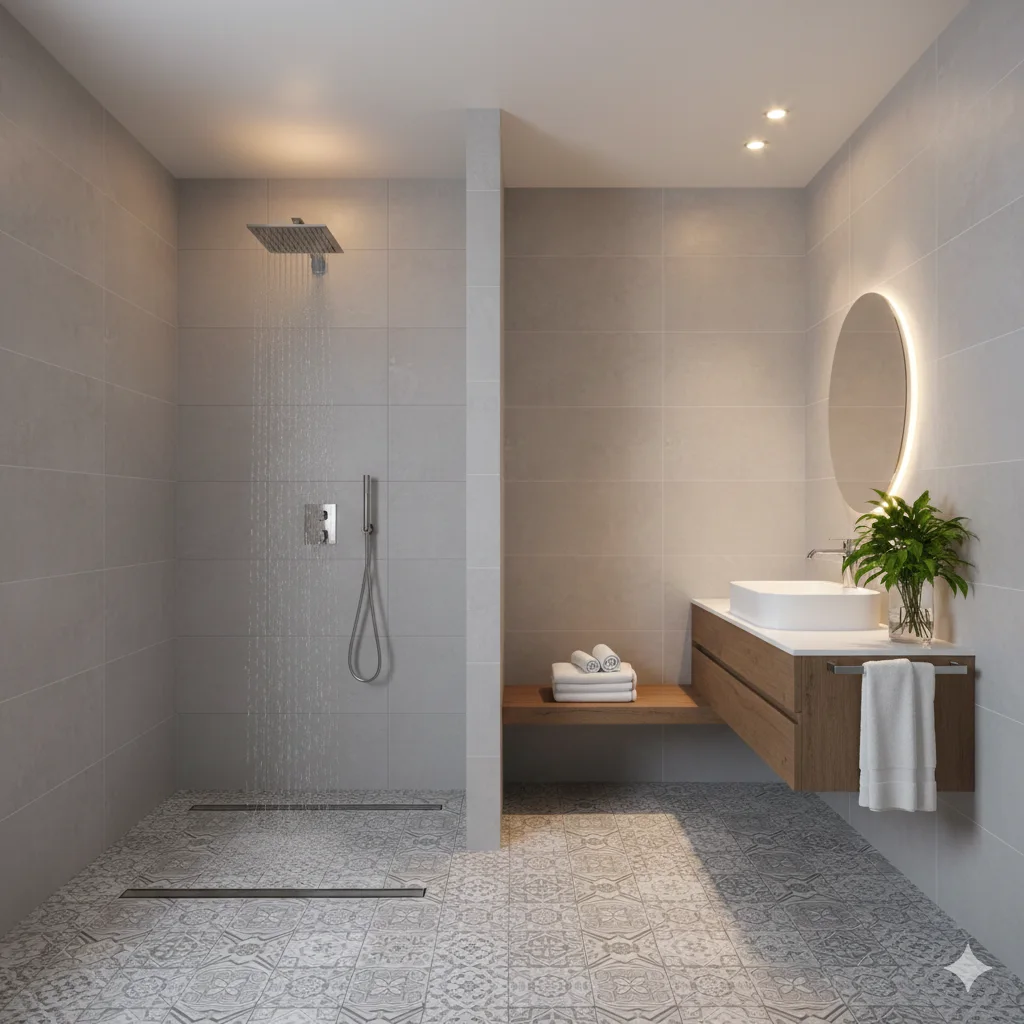
In bathrooms, using porcelain bathroom wall tiles that are also rated for floors is increasingly popular. You might choose:
-
The same bathroom floor tiles and wall tiles for a fully tiled, hotel-style bathroom.
-
Neutral stone-look porcelain tiles for both the shower wall and the floor.
-
Accent niches made with patterned floor tiles to break the monotony.
Just be careful not to use extremely rough anti-slip floor textures on all walls, they can feel too aggressive and be harder to clean.
Kitchens: Walls, Floors & Backsplash
The kitchen is another perfect room to experiment. You can:
-
Continue kitchen floor tiles up the island sides or as a half-height wall cladding.
-
Use durable porcelain floor tiles as kitchen backsplash tiles behind the hob and sink for easy cleaning.
-
Mix plain kitchen wall tiles with a band of patterned floor tiles as a design highlight.
Because kitchens see frequent splashes, heat, and stains, porcelain wall and floor tiles are a smart, long-term solution.
Living Spaces & Feature Walls
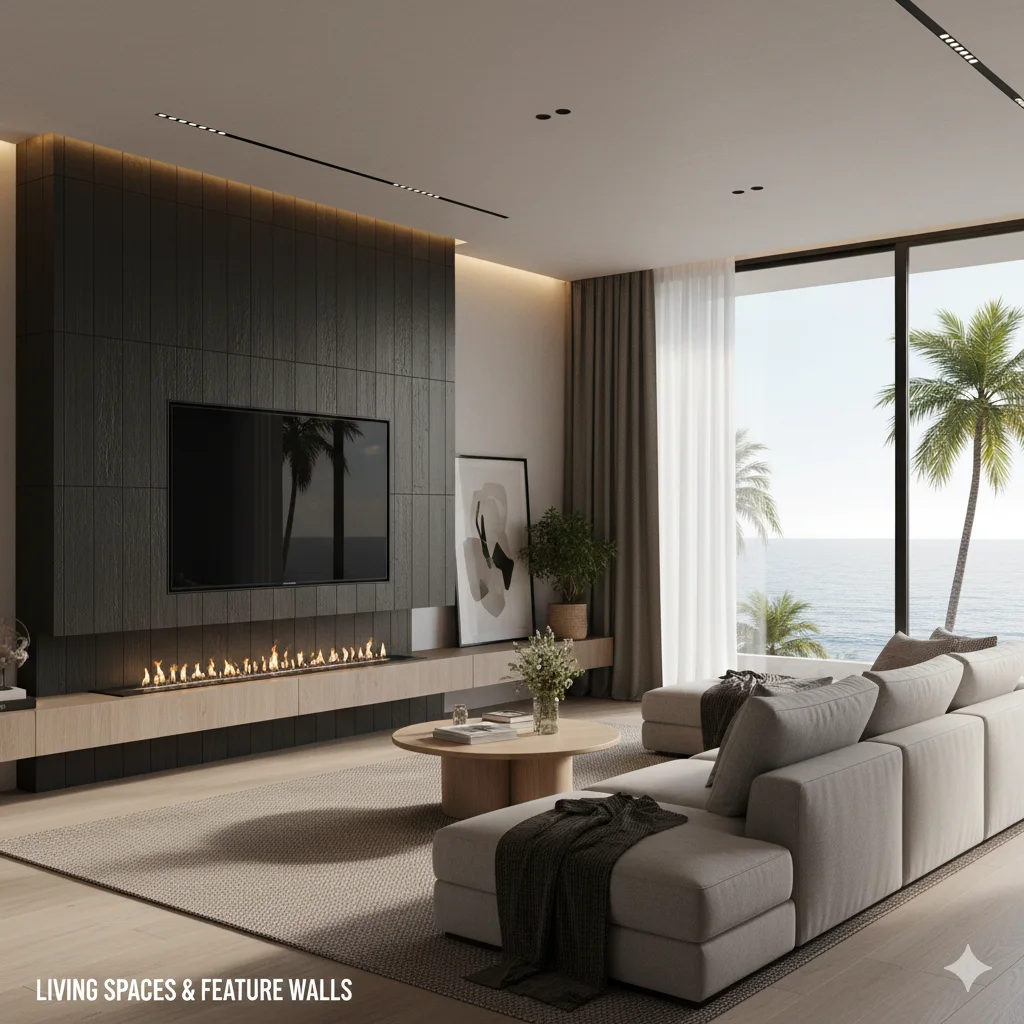
In living rooms, corridors and lobbies, floor-rated tiles on walls can create stunning feature areas:
-
A stone-effect TV wall using large wall and floor porcelain tiles
-
A bold entry wall with dark, structured porcelain floor tiles
-
Staircase risers clad in patterned floor tiles that coordinate with floor tiles for stairs or adjacent floors
This approach ensures continuity and adds a strong visual anchor to the space.
Technical Checklist Before You Decide
1. Check Tile Material: Ceramic vs Porcelain
Both ceramic and porcelain tiles can be used on walls, but porcelain is usually denser, less porous, and more suitable for high-moisture spaces. For bathrooms and kitchens, many professionals prefer:
-
Porcelain floor tiles in showers and wet zones
-
Matching porcelain wall tiles or porcelain bathroom wall tiles on vertical surfaces
Porcelain offers excellent stain resistance, water resistance, and durability in both wall and floor applications.
2. Check Size, Weight & Surface
Ask your supplier or installer:
-
What is the weight per m² of the tile?
-
What is the maximum weight your wall construction can safely support?
-
Does the surface have a texture that makes sense on walls, or will it trap dust and soap?
For very large formats or heavy slabs, professional handling, lifting tools, and a strong tile substrate are essential.
3. Check Tile Substrate, Adhesive & Grout
For walls in wet rooms, especially showers, the right tile substrate matters as much as the tile itself. Cement-based tile backer boards, proper waterproofing, and high-quality adhesive systems help prevent failures.
Use flexible adhesive compatible with porcelain, respect recommended trowel sizes, and choose grout that suits the joint width and room conditions.
Floor Tiles vs Wall Tiles for Use on Walls – Quick Comparison
|
Feature |
Floor Tiles (Used on Walls) |
Wall Tiles (Standard Use) |
|
Typical Thickness |
Thicker, denser, designed for foot traffic |
Thinner, lighter for vertical installation |
|
Weight |
Heavier → needs strong wall & substrate |
Lighter → easier to fix on most walls |
|
Surface Finish |
Often matte / textured for grip |
Often glossy / decorative for aesthetics |
|
Best Wall Applications |
Bathrooms, kitchens, feature walls, high-impact areas |
General wall cladding, decorative surfaces |
|
Installation Difficulty |
Moderate to high (depends on size & weight) |
Lower, especially with smaller formats |
|
Longevity on Walls |
Very high when installed correctly |
High, but not as over-engineered as floor-grade tiles |
Design Ideas Using Floor Tiles on Walls
Monochrome, Stone & Concrete Looks
If you love minimalist interiors, consider using the same neutral floor tiles and wall tiles throughout a bathroom or kitchen. Stone-look and concrete-look porcelain tiles create a spa-like effect, especially when combined with warm lighting and natural wood accents.
You can also pair plain porcelain wall tiles with patterned floor tiles on just one niche or shower wall to add interest without overwhelming the space.
Patterned & Feature Walls
Feature walls are where patterned floor tiles really shine. Use them:
-
Behind the vanity mirror in the bathroom
-
On the wall behind your TV unit in the living room
-
On a vertical strip in your entrance or corridor
Because floor tiles are tougher, these feature walls will stay beautiful even in high-traffic zones.
Why Choose Bridh Ceramica for Wall and Floor Solutions?
Bridh Ceramica is a leading tile manufacturer and exporter from Morbi, Gujarat, offering a wide range of premium porcelain tile and ceramic collections for both walls and floors.
For homeowners, architects, and designers, Bridh Ceramica provides:
-
A complete range of floor tiles and wall tiles, including wall and floor porcelain tiles
-
Versatile options for bathroom floor tiles, bathroom wall tiles, kitchen floor tiles, kitchen wall tiles, and kitchen backsplash tiles
-
Multiple finishes, sizes, and designs from minimalist stone looks to bold patterns
-
International quality standards, consistent sizing, and durable glazes suitable for long-term projects
Whether you want matching porcelain wall and floor tiles for a luxury bathroom or stylish porcelain wall tiles for a modern living room, you can plan your entire project under one brand.
FAQs: Quick Answers
Q1. Can you use floor tiles on shower walls?
Yes, many floor-rated porcelain tiles can be used on shower walls if the wall structure, tile substrate, and adhesive are suitable. Always confirm that the tile is approved for wall use and stick to professional installation.
Q2. Is it cheaper to use the same tiles on walls and floors?
Often yes. Using the same porcelain floor tiles or coordinated wall and floor porcelain tiles can simplify ordering and reduce wastage. However, labour might cost slightly more for heavier tiles on walls.
Q3. Are all porcelain floor tiles suitable for walls?
Not always. Check the manufacturer’s data. Some heavy or extra-thick tiles may be too heavy for certain wall constructions.
Q4. Do I need a professional installer for heavy floor tiles on walls?
It’s strongly recommended. Handling large-format floor tiles on walls requires experience, correct tools, and technical knowledge of substrates and adhesives.
Conclusion
So, can you use floor tiles on walls? Yes, when done correctly, it can look stunning, perform brilliantly, and last for many years. The key is to understand the differences between floor tiles and wall tiles, respect weight and substrate limitations, and choose suitable materials like porcelain tiles for bathrooms and kitchens.
Plan your design, check all technical points, and then explore collections from a trusted manufacturer like Bridh Ceramica to find the perfect combination of style, safety, and durability for your walls and floors.
Whatsapp Chatx
Hi! Click one of our representatives below to chat on WhatsApp or send us email to dhaval@bridhceramica.com

|
************** +91 97023 82809 |
 TILES VIEW