Ceramic Wall Tile Exporter to Brazil From India
Jun 05, 2026Connect With Our Team
Latest Blogs

Choosing the right tile is not just about design. It is about performance, longevity, and long-term value. When building or renovating a home, one question often comes up: which tile lasts longer ceramic tiles, porcelain tiles, or full body tiles?
Each tile type has its own strengths. The right choice depends on where you plan to install it, the level of foot traffic, and the overall design vision. In this guide, we will explore durability, performance, and ideal applications to help you make an informed decision.
What Are Ceramic Tiles and How Durable Are They?
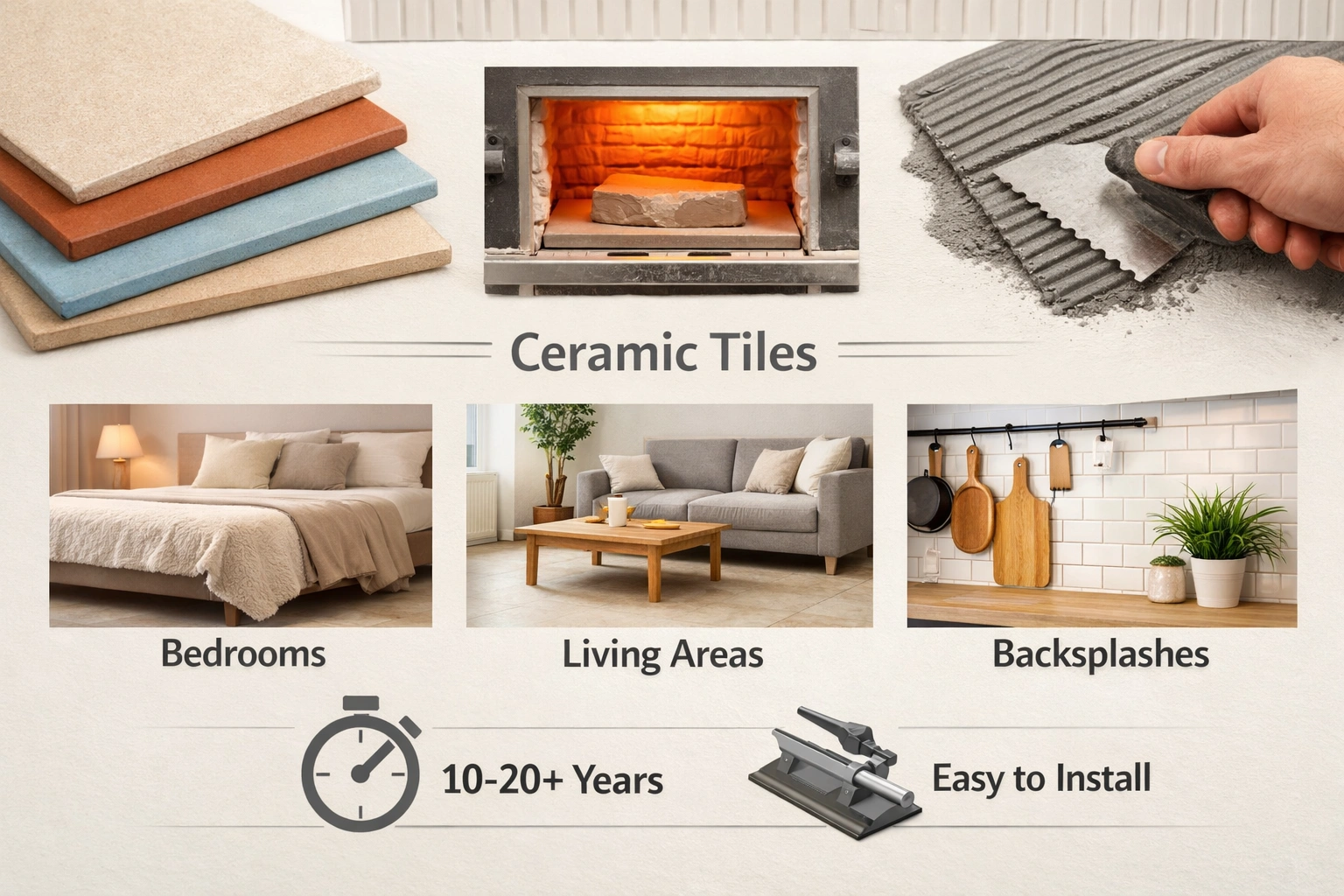
Ceramic tiles are made from natural clay, sand, and water. They are shaped and fired at high temperatures, then finished with a glaze. This glazing process gives ceramic floor tiles and ceramic wall tiles their color, pattern, and protective layer.
One of the biggest advantages of ceramic tile flooring is its affordability combined with decent durability. It performs well in residential spaces with moderate foot traffic. Bedrooms, living rooms, and wall applications are common areas where ceramic tiles are used.
However, ceramic tiles are slightly less dense compared to porcelain tiles. This means they may be more prone to chipping under heavy impact. Still, with proper installation and maintenance, ceramic floor tiles can last 10–20 years or even longer in low-traffic areas.
They are also easier to cut and install, which makes them a preferred choice for decorative walls and backsplashes.
How Are Porcelain Tiles Different from Ceramic Tiles?
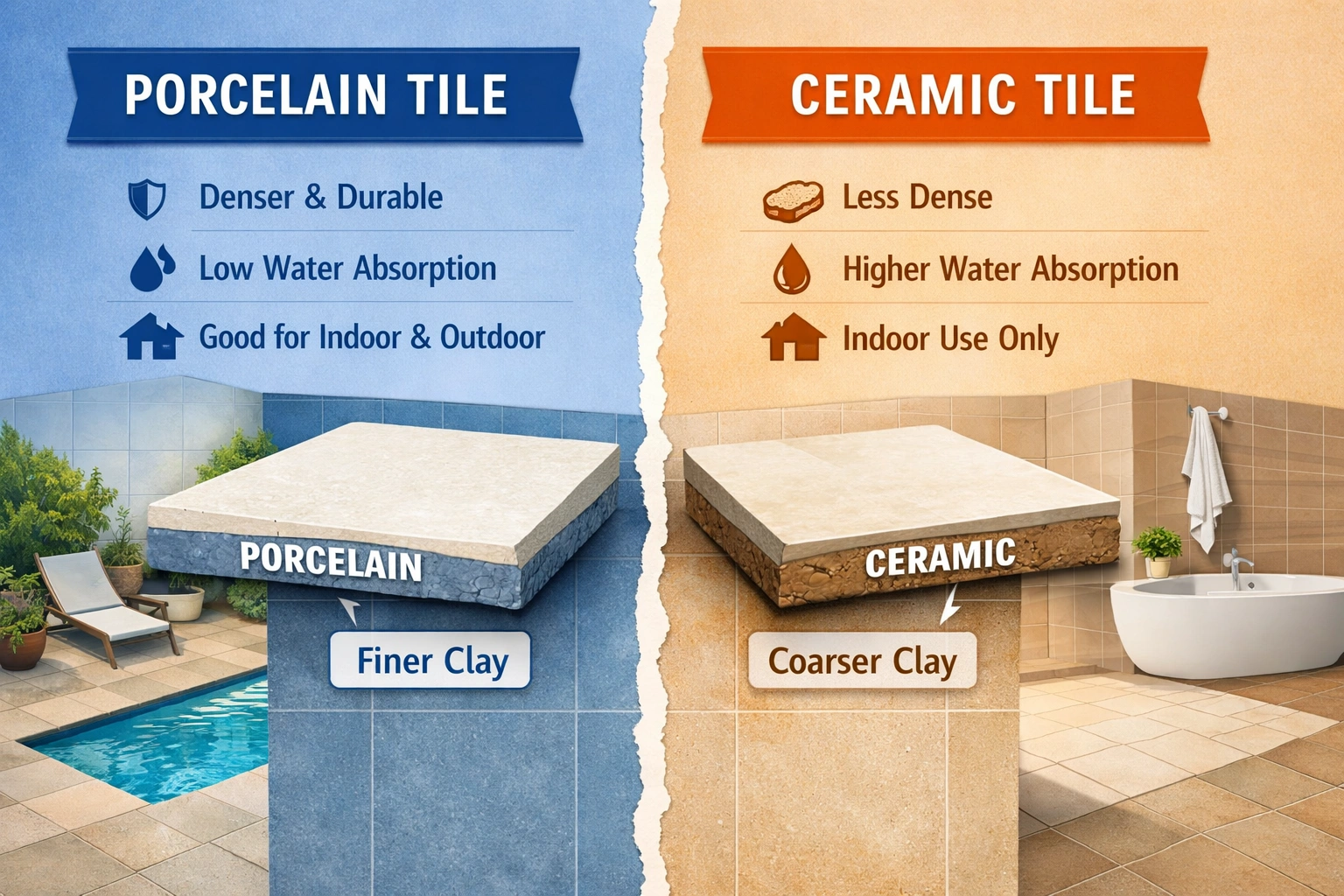
At first glance, porcelain tiles look similar to ceramic tiles. The difference lies in the composition and firing process. Porcelain tiles are made from finer clay and fired at much higher temperatures. This makes them denser, harder, and less porous.
Porcelain tile flooring is known for its exceptional strength. The low water absorption rate makes it ideal for bathrooms, kitchens, and even outdoor spaces. Because of its density, porcelain floor tiles can handle high foot traffic without wearing down easily.
Porcelain wall tiles are also popular in wet areas due to their resistance to moisture and stains. Unlike some ceramic tiles, porcelain tiles can withstand temperature fluctuations better, making them suitable for exterior installations.
In terms of lifespan, porcelain tiles can easily last 20–30 years or more when properly maintained. This makes them a strong competitor in the durability debate.
What Makes Full Body Tiles Unique?
Full body tiles are a type of porcelain tile where the color and design run throughout the entire thickness of the tile. Unlike glazed options, the surface and core are the same.
This uniform composition gives full body floor tiles a major advantage. Even if the surface chips or scratches, the damage is less noticeable because the color remains consistent.
Full body tiles are often used in commercial spaces, malls, airports, and industrial areas. These environments demand high performance and resistance to heavy loads. Full body wall tiles are also used in areas where durability is critical.
Because of their structure, full body floor tiles are considered among the most durable options available in the market today.
Which Tile Is Most Durable for Flooring?
When comparing ceramic tile flooring, porcelain tile flooring, and full body floor tiles, durability depends on usage.
Ceramic floor tiles are suitable for homes with moderate traffic. They are cost-effective and stylish but may not perform as well under constant heavy use.
Porcelain floor tiles offer higher density and strength. They resist scratches, stains, and moisture more effectively. For families with pets or children, porcelain tile flooring provides long-term reliability.
Full body floor tiles take durability one step further. Their through-body composition makes them highly resistant to visible wear and tear.
Durability Comparison Table
| Feature | Ceramic Tiles | Porcelain Tiles | Full Body Tiles |
|---|---|---|---|
| Density | Moderate | High | Very High |
| Water Absorption | Higher | Very Low | Very Low |
| Scratch Resistance | Medium | High | Very High |
| Ideal Use | Residential interiors | Indoor & Outdoor | Commercial & Heavy Traffic |
| Average Lifespan | 10–20 Years | 20–30+ Years | 25–35+ Years |
From this comparison, full body tiles generally last the longest in high-traffic areas, followed closely by porcelain tiles.
Which Tile Works Best for Walls?
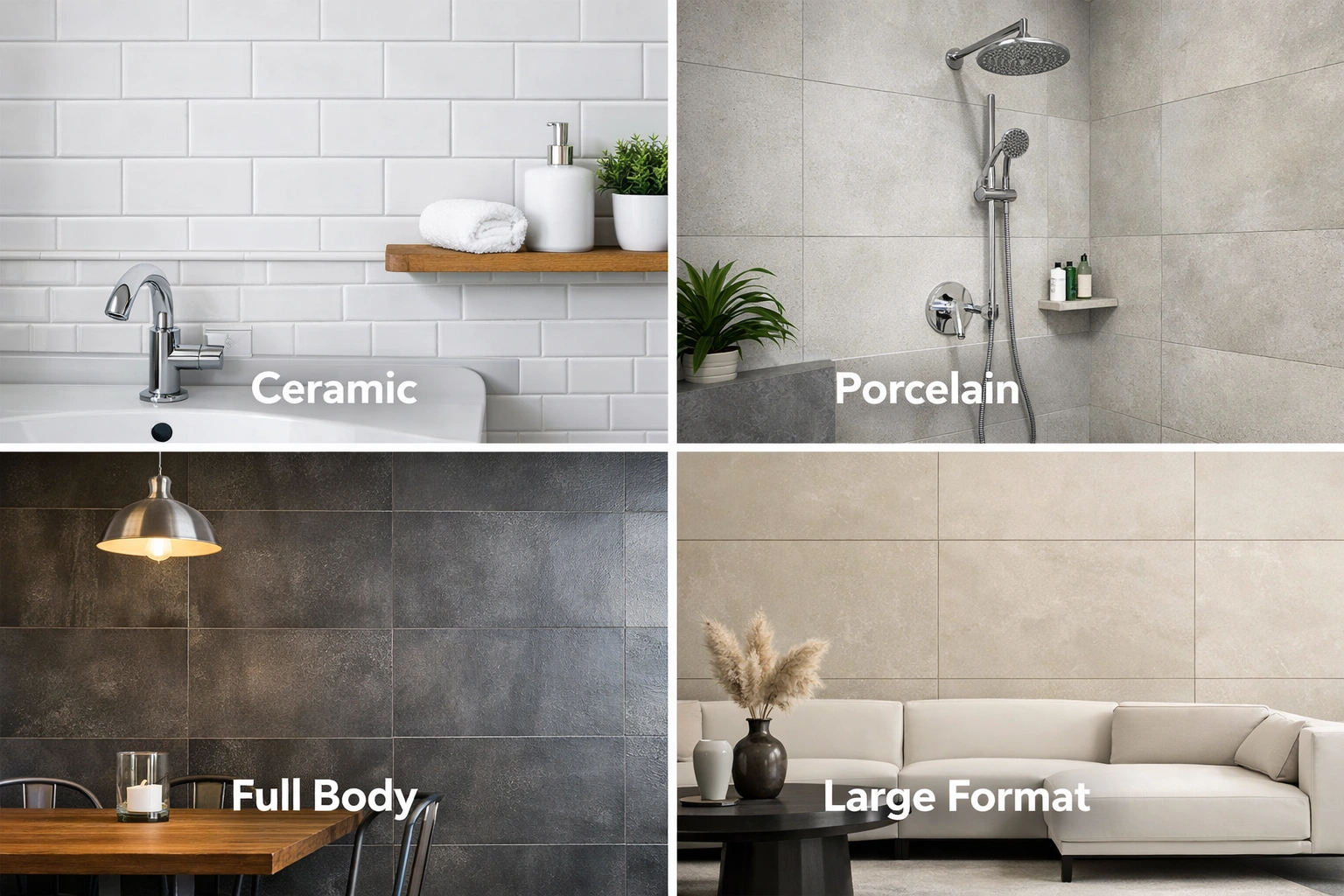
Wall applications require lighter weight and aesthetic flexibility. Ceramic wall tiles are widely used because they are easy to install and available in numerous designs.
Porcelain wall tiles are ideal for bathrooms and kitchens due to their moisture resistance. They are slightly heavier than ceramic wall tiles but offer greater durability.
Full body wall tiles are less common in residential wall spaces because they are primarily designed for heavy-duty flooring. However, they are suitable for commercial wall cladding where strength matters.
For decorative walls, large format tiles have become increasingly popular. They create a seamless appearance with fewer grout lines. Both ceramic tiles and porcelain tiles are available in large format tiles, offering both durability and style.
Do Surface Finishes Impact Longevity?
Yes, the finish plays an important role in performance. Matt tiles and polished tiles behave differently over time.
Matt tiles provide better slip resistance. They are ideal for bathrooms and outdoor areas. Their textured surface hides minor scratches better, increasing perceived durability.
Polished tiles, on the other hand, offer a glossy and luxurious look. They reflect light beautifully, making spaces appear larger. However, polished tiles may show scratches more easily in high-traffic areas.
Both finishes are available in ceramic tiles, porcelain tiles, and full body tiles. The choice depends on the balance between design and functionality.
Are Large Format Tiles More Durable?
Large format tiles are not necessarily stronger, but they reduce grout lines. Fewer grout joints mean less maintenance and fewer weak points where dirt or moisture can accumulate.
Porcelain floor tiles in large format options are especially popular in modern homes. Ceramic floor tiles also come in large sizes, but porcelain tile flooring tends to handle structural stress better.
When properly installed on a stable subfloor, large format tiles can perform just as well as standard sizes.
What Factors Influence Tile Lifespan?
Even the strongest full body tiles can fail if installed incorrectly. Longevity depends on several factors:
-
Proper subfloor preparation
-
Quality adhesive and grout
-
Professional installation
-
Regular cleaning and maintenance
Moisture exposure also matters. Porcelain tiles and full body floor tiles handle wet conditions better than ceramic floor tiles. In high-humidity climates, porcelain tile flooring is often the safer option.
Maintenance is equally important. Using non-abrasive cleaners preserves the surface of polished tiles and matt tiles alike.
Why Choosing the Right Manufacturer Matters
Durability is not just about material type. Manufacturing quality plays a crucial role. Precision firing, advanced glazing techniques, and strict quality control determine how long ceramic tiles, porcelain tiles, and full body tiles truly last.
Bridh Ceramica has built a reputation for producing high-performance tile solutions that meet modern architectural demands. The company combines innovative manufacturing processes with contemporary design trends, offering ceramic tile flooring, porcelain tile flooring, and full body floor tiles engineered for durability.
With a focus on strength, aesthetics, and long-term performance, their collection includes ceramic wall tiles, porcelain wall tiles, and large format tiles designed to suit both residential and commercial environments. Their commitment to quality ensures customers receive tiles that stand the test of time.
Which Tile Should You Choose?
If budget is a concern and traffic is light to moderate, ceramic tiles are a reliable option. Ceramic tile flooring works well in bedrooms and living spaces.
If you want stronger performance with moisture resistance, porcelain tiles are the better choice. Porcelain floor tiles are excellent for kitchens, bathrooms, and even outdoor areas.
For maximum durability in heavy-traffic zones, full body tiles offer the best long-term investment. Full body floor tiles perform exceptionally well in commercial spaces and busy households.
Ultimately, the right decision depends on usage, environment, and aesthetic preference.
Choose Right Tiles Manufacturer
Conclusion
When comparing ceramic tiles, porcelain tiles, and full body tiles, each has its place. Ceramic tiles provide affordability and versatility. Porcelain tiles deliver superior strength and moisture resistance. Full body tiles offer unmatched durability for demanding environments.
Ceramic tile flooring is ideal for comfortable residential interiors. Porcelain tile flooring suits both indoor and outdoor applications. Full body floor tiles excel in commercial and heavy-duty settings.
By understanding your space requirements, traffic levels, and maintenance expectations, you can select the tile that truly lasts the longest for your needs.
Tile Durability & Performance FAQs
1. Which tile lasts longer in high-traffic areas?
Full body tiles generally last the longest in high-traffic environments due to their uniform composition and superior density.
2. Are porcelain tiles stronger than ceramic tiles?
Yes, porcelain tiles are denser and less porous than ceramic tiles, making them more durable and moisture resistant.
3. Do full body tiles scratch easily?
Full body floor tiles resist scratches well. Even if surface wear occurs, the consistent color reduces visible damage.
4. Which tile is best for bathroom walls?
Porcelain wall tiles are highly recommended for bathrooms because of their low water absorption.
5. Are matt tiles or polished tiles more durable?
Matt tiles tend to hide scratches better, while polished tiles offer a glossy appearance. Both can be durable depending on the material quality.
Whatsapp Chatx
Hi! Click one of our representatives below to chat on WhatsApp or send us email to [email protected]

|
************** +91 97023 82809 |
 TILES VIEW